
If someone at home sneezes every morning, wakes up congested or gets itchy eyes after the weekly clean, the problem may not be how often you clean but how. Allergy friendly cleaning is about removing the triggers, mainly dust mites, pet dander, mould and fine dust, without blowing them back into the air or adding strong fumes. In UAE homes, sealed rooms, constant air conditioning and desert dust make that harder. This guide covers the main triggers, the bedroom first routine, the methods that trap allergens instead of moving them, how often to do each job and what to tell a cleaner when you book.
This is general cleaning guidance, not medical advice. If you or your child has asthma or a diagnosed allergy, follow the plan from your doctor.
Know your triggers
Different allergens live in different places, so a good routine starts with knowing what you are cleaning for.
| Trigger | Where it collects | What helps most |
|---|---|---|
| House dust mites | Mattresses, pillows, duvets, sofas, carpets, soft toys | Barrier covers, hot washing bedding, high filtration vacuuming, lower humidity |
| Pet dander | Sofas, rugs, bedding, AC vents, clothes | Frequent vacuuming of fabrics, pets out of the bedroom, washable throws |
| Mould | Bathroom grout and silicone, under sinks, behind furniture on cold walls, AC drip trays | Fixing moisture, drying wet areas quickly, extractor fans |
| Fine dust and sand | Window sills, door tracks, balconies, AC vent fronts, floors | Damp dusting, sealing gaps, regular AC filter cleaning |
According to the Allergy UK house dust mite factsheet, it is mostly proteins in mite droppings, not the mites themselves, that cause symptoms, and those droppings keep causing problems after the mites die. That is why removing dust matters as much as killing mites.
Want a fixed price for your home?
Tell us your home size and area and a vetted team gets back with an exact quote, usually the same day.
Start with the bedroom
Allergy UK notes that a large share of dust mite exposure happens in bed, so the bedroom is where an allergy friendly routine pays off first.
- Cover the bed. Put breathable, zip on allergen barrier covers on the mattress, duvet and every pillow.
- Wash bedding hot. Wash sheets, pillowcases and anything not in a barrier cover every week at 60°C or above. Allergy UK explains that cooler washes rinse allergen away for a while, but the mites survive.
- Cut soft clutter. Fewer cushions, throws and soft toys means fewer places for mites. Wash soft toys at 60°C, or if they cannot take it, freeze them in a bag for at least 12 hours once a month and then wash them.
- Choose washable curtains. Light cotton curtains that go in the machine are easier to keep allergen free than heavy drapes.
- Keep pets out. If a pet sleeps on the bed, dander ends up in the bedding every night. Our guide to cleaning a house with pets covers hair and dander in the rest of the home.
Methods that trap allergens instead of moving them
The biggest mistake is cleaning in a way that throws allergens into the air, where they hang around and settle again an hour later.
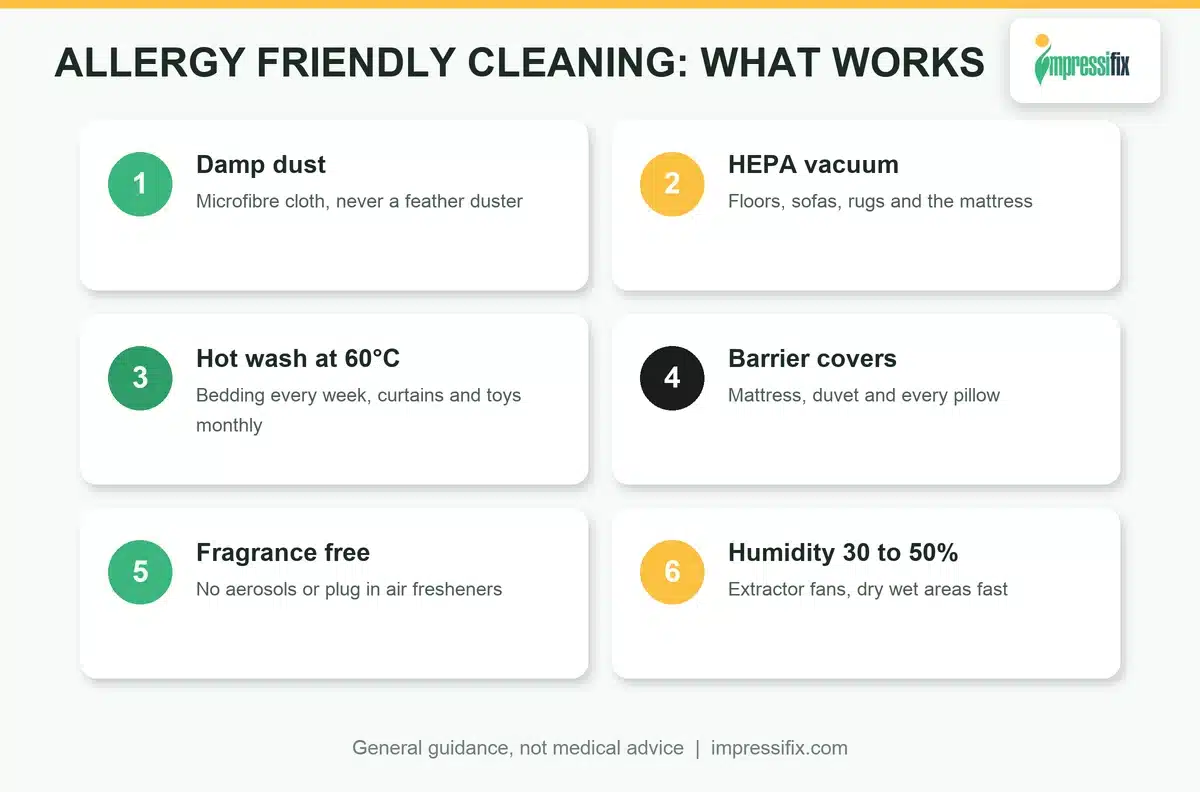
- Damp dust, never dry. Wipe sills, shelves, the tops of cupboards and skirting boards with a slightly damp microfibre cloth. Feather dusters and dry cloths mainly move dust around.
- Use a high filtration vacuum. Allergy UK recommends a vacuum with a HEPA or similar filter that holds on to the smallest particles. A vacuum with a poor filter or a leaking bag blows fine dust out of the exhaust.
- Vacuum fabrics often. Vacuum sofas and upholstered chairs at least twice a week, and rugs and carpets once or twice a week.
- Mop after vacuuming. Vacuum first to lift dust and sand, then damp mop hard floors so nothing is smeared around.
- Work top to bottom. Dust high surfaces and AC vent fronts first, then furniture, then floors, so the last pass picks up what fell.
- Protect the person with allergies. If possible, they should be out of the room while you clean and for a while after, or wear a well fitting mask during dusty jobs.
Products: fewer fumes, less fragrance
Strong scents and sprays can irritate sensitive airways even when they are not the cause of an allergy.
- Choose fragrance free or lightly scented products, and skip plug in air fresheners and scented sprays in bedrooms.
- Use liquids or wipes rather than aerosols, and spray onto the cloth, not into the air.
- Never mix products. Bleach mixed with ammonia or acids releases harmful gases.
- Ventilate while you clean bathrooms and kitchens, with the extractor fan on.
Our guide to non toxic cleaning products explains how to read labels and which gentler swaps work for common jobs.
Humidity, AC and mould in UAE homes
Dust mites and mould both like humid air. Allergy UK suggests keeping indoor humidity under 50 percent but above 30 percent, and the US EPA’s guide to mould and moisture recommends below 60 percent, ideally 30 to 50 percent, and drying wet areas within 24 to 48 hours.
- Run bathroom and kitchen extractor fans during and after showers and cooking.
- Clean AC filters and vent fronts regularly. They collect dust and sand, and a blocked drip tray can grow mould. Our guide to reducing dust at home covers AC vents and filters in more detail.
- Keep grout and silicone dry. Squeegee shower glass and tiles, and leave the bathroom door open after use.
- Know when to stop. The EPA says mould covering more than about 10 square feet, or mould after water damage, needs professional advice rather than a quick wipe. Cleaning removes surface mould; it does not fix the leak or damp behind it.
- Close up on dusty days. Keep windows and balcony doors shut during dust and sandstorms, then damp wipe sills and tracks once it settles.
An allergy friendly cleaning routine
| How often | Jobs |
|---|---|
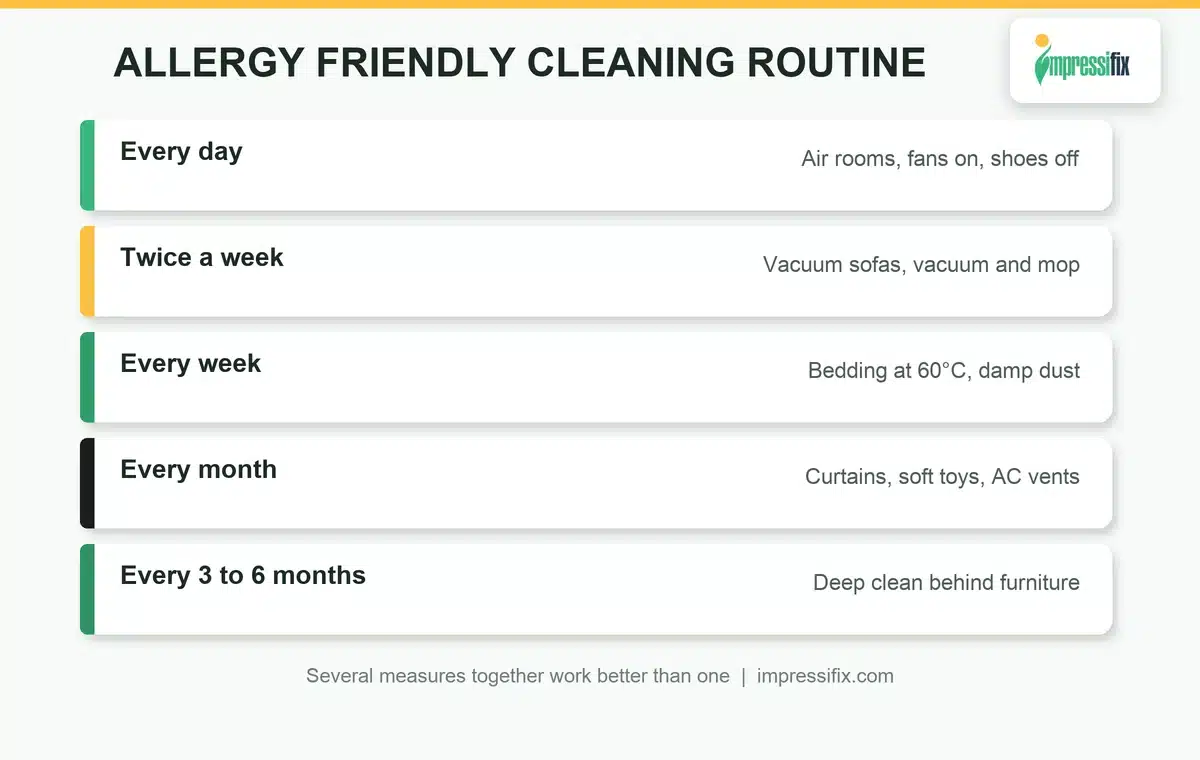
| Every day | Air the bedroom, wipe bathroom surfaces dry, run extractor fans, shoes off at the door |
| Twice a week | Vacuum sofas and upholstered chairs, vacuum and mop floors in bedrooms and living areas |
| Every week | Wash bedding at 60°C, damp dust all surfaces, vacuum rugs and carpets, clean bathrooms |
| Every month | Wash curtains and throws, freeze or wash soft toys, clean AC vent fronts, check under sinks for damp |
| Every 3 to 6 months | Deep clean: behind and under furniture, mattress vacuuming, grout and silicone, inside cupboards |
Allergy UK stresses that one or two measures alone may make no difference; doing several together, properly, is what lowers exposure. Our regular cleaning service can take the weekly floors, bathrooms and dusting off your list, and a deep clean every few months reaches the places a weekly visit skips.
Booking a cleaner when someone has allergies
- Tell us about allergies and asthma when you book, along with children and pets in the home.
- Say which products to use or avoid, for example fragrance free only or no bleach. If you want the team to use your own products, set them out with the other supplies, and we confirm what is possible for your visit.
- Ask about the equipment, such as the type of vacuum, if that matters to you.
- Plan to be out during the clean if dust bothers you, and come back once the rooms have aired.
- Add extras if you need them. Changing linen, ironing or cleaning inside the fridge can be added at an extra cost, confirmed at booking.
Prices for regular visits and deep cleans are on our cleaning price calculator.
Frequently asked questions
What is the best way to clean my house if I have allergies?
Focus on the bedroom first with barrier covers and bedding washed weekly at 60°C, then clean in a way that traps dust: damp dust surfaces, use a vacuum with a HEPA filter, and mop after vacuuming. Use fragrance free products, keep humidity down and, if you can, stay out of the room while it is cleaned.
What is the most effective cleaning method for removing allergens?
Trapping, not moving. A damp microfibre cloth on hard surfaces and a high filtration vacuum on floors and fabrics remove allergens instead of throwing them into the air the way dry dusting and sweeping do. Hot washing at 60°C does the same job for bedding, curtains and soft toys.
What cleaning products are hypoallergenic?
There is no single standard for “hypoallergenic” on cleaning products, so read the label. Fragrance free, dye free liquids are usually the gentlest choice, and some products carry an asthma and allergy friendly certification. Avoid aerosols and strong scents, and never mix bleach with ammonia or acids.
How do I deep clean my house for dust mites?
Wash all bedding, curtains and washable toys at 60°C, vacuum the mattress, sofas, rugs and carpets slowly with a HEPA vacuum, and damp wipe every surface from high to low, including the tops of wardrobes and AC vent fronts. Then put barrier covers on the mattress and pillows and keep humidity below 50 percent.
What kills dust mites in a house?
Heat and dryness. Washing at 60°C or above kills mites, while cooler washes only rinse the allergen away for a while. Freezing soft toys for at least 12 hours also kills them, and lower humidity stops them from thriving. Allergy UK notes that you cannot remove every mite, so the aim is to keep numbers and allergen low.
Book your clean or get a quote in 60 seconds
Tell us your home size, your area and any allergies, children, pets or product preferences, and we will confirm a fixed price and a vetted team before you commit. Our team answers Monday to Saturday, 9:30am to 7pm.