
The painters and tilers have finished, but the new bathroom has a cloudy film on every tile, there are paint drips on the floor and sticky tape marks on the windows. Paint, grout and glue are the three residues almost every renovation leaves behind, and each one needs a different method. Use the wrong one and you can scratch glass, etch marble or smear adhesive across a whole floor. This guide to paint, grout and glue removal after renovation explains how to remove each residue by surface, what to avoid, and when to hand the job to an after builders cleaning team.
This is general guidance. Always read the instructions on the grout, adhesive or paint your contractor used, and test any product on a hidden spot first.
Before you start: three checks
- Is it finished and cured? Fresh grout and fresh paint need time to set. Cleaning too early can pull grout out of the joints or smudge paint further.
- What is the surface? Glazed ceramic and porcelain tiles and plain glass are tough. Natural stone such as marble, travertine and limestone is easily damaged by acids. Wood, laminate, painted walls and plastic fittings scratch easily.
- What is the residue? Water based or oil based paint, cement based or epoxy grout, tape glue or tile adhesive. If you do not know, ask the contractor before they leave, and keep any leftover packaging.
Want a fixed price for your home?
Tell us your home size and area and a vetted team gets back with an exact quote, usually the same day.
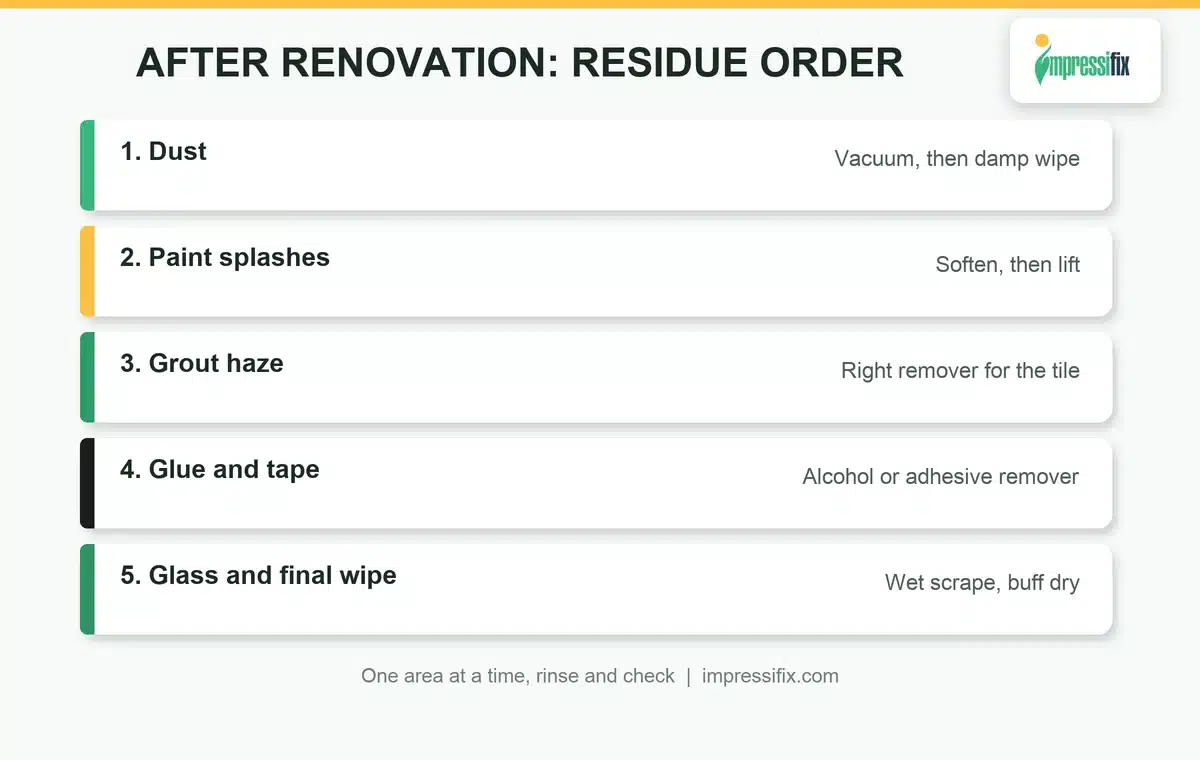
Paint splashes
Most paint in UAE homes is water based (emulsion or acrylic), which is much easier to remove than oil based gloss or enamel on doors and frames.
- Fresh water based paint: wipe it off straight away with warm soapy water and a microfibre cloth.
- Dried water based paint on tiles: soften it with warm soapy water for a few minutes, then lift it with a plastic scraper. Isopropyl alcohol on a cloth can soften stubborn spots on glazed tile; rinse afterwards.
- Paint on glass: wet the glass with soapy water and slide a new razor blade scraper held flat to the glass. Never scrape dry glass, and do not use a blade on tinted film or coated glass.
- Oil based paint: use white spirit or a solvent recommended by the paint maker, sparingly, with windows open, then wash the area with soapy water.
- Wood and laminate floors: no soaking and no blades. Soften the drip with a barely damp cloth and ease it off with a plastic card or your fingernail.
Removing paint from a whole wall or piece of furniture is stripping, not cleaning, and is a job for a painter.
Grout haze and cement film
Grout haze is the cloudy film of cement and minerals left on the face of tiles after grouting. It is easiest to remove while it is fresh, and the right method depends on the tile and the grout.
| Situation | What to use | What to avoid |
|---|---|---|
| Fresh haze, glazed ceramic or porcelain | Clean water, a well wrung sponge and a dry microfibre cloth to buff | Soaking the joints while the grout is still soft |
| Dried cement grout haze, glazed ceramic or porcelain | A cement or grout haze remover made for tiles, or diluted white vinegar for light haze, then a thorough rinse | Using acid before the grout has cured; metal scourers |
| Natural stone (marble, travertine, limestone) | A pH neutral stone cleaner or a non acid haze remover made for stone | Vinegar, lemon and any acid cleaner: they etch and dull the stone permanently |
| Epoxy grout haze | An epoxy grout haze remover, as the grout maker specifies | Vinegar and cement haze removers: they do not work on epoxy |
If the haze returns after it dries, it is usually residue being moved around by a dirty cloth or bucket. Change the water often and finish with a dry buff.
Glue, tape and adhesive residue
- Masking tape and protective film marks: peel slowly, then rub the sticky marks with warm soapy water. Isopropyl alcohol or a citrus based adhesive remover lifts what is left on glass and glazed tile.
- Stickers and labels on new fittings: warm them with a hair dryer, peel, then remove the residue with a little cooking oil or adhesive remover and wash off the oil with soapy water.
- Tile adhesive on the face of tiles: while it is still soft, a damp sponge removes it. Once hard, ease it off with a plastic scraper; for cement based adhesive on glazed tile, the same haze remover used for grout often helps.
- Silicone smears: cut and lift the bulk with a plastic blade, then use a silicone remover made for the surface. Do not rub fresh silicone; it spreads.
- Acetone or nail polish remover: works on super glue on glass and glazed tile, but it can melt plastics, damage painted and lacquered surfaces and mark some floors, so test first.
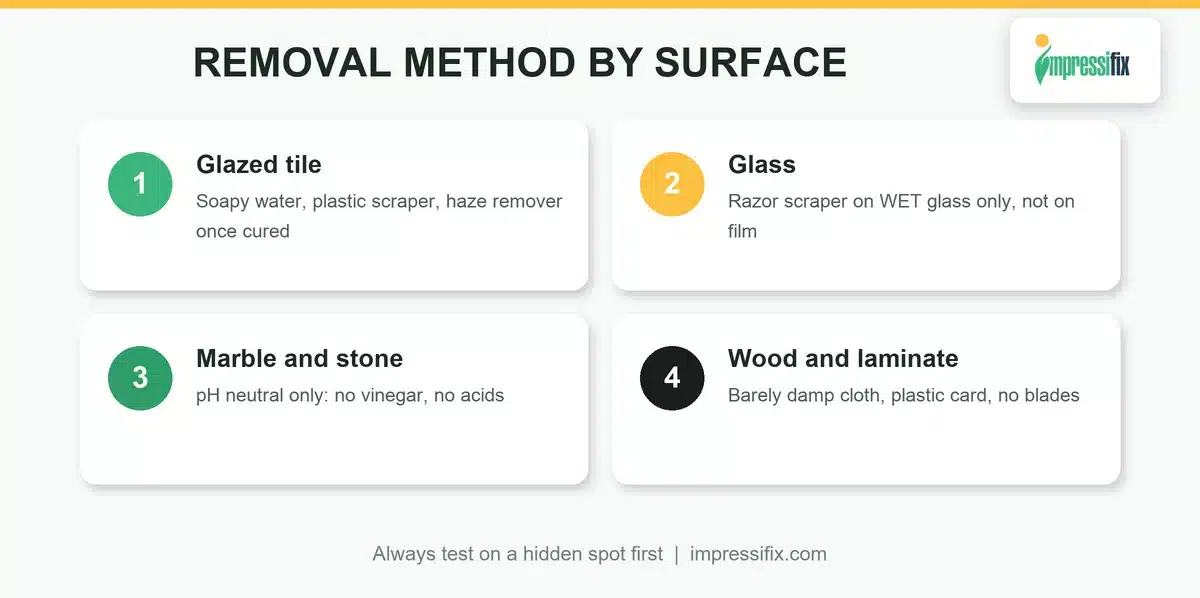
Paint, grout and glue removal by surface
| Surface | Safe methods | Do not use |
|---|---|---|
| Glazed ceramic and porcelain tiles | Soapy water, plastic scraper, isopropyl alcohol, tile haze remover after curing | Steel wool, wire brushes |
| Glass and mirrors | Soapy water, razor scraper on wet glass, isopropyl alcohol | Dry scraping, blades on tinted film or coated glass |
| Marble and other natural stone | pH neutral stone cleaner, plastic scraper, gentle pressure | Vinegar, lemon, acid haze removers, bleach |
| Wood, laminate and vinyl floors | Barely damp cloth, plastic card, the floor maker’s cleaner | Soaking, blades, strong solvents |
| Stainless steel and chrome fittings | Soapy water, soft cloth, isopropyl alcohol | Scourers, bleach, scraping across the grain |
Safety while you work
- Ventilate. Open windows and run extractor fans when using solvents, alcohol or acid cleaners.
- Protect yourself. Wear rubber gloves and eye protection with haze removers and solvents.
- Never mix products, especially bleach with acids or ammonia.
- Do one small area at a time, rinse, and check the result before moving on.
- Keep rags safe. Let solvent soaked rags dry flat outdoors before putting them in the bin.
When to book after builders cleaning instead
Spot removal is a weekend job. A whole flat or villa with paint on the floors, haze on every bathroom wall and fine dust in every vent is a different scale of work, and it is best done once, in the right order, after the trades have finished and before the furniture comes in.
Our after builders cleaning service is quoted by scope, after you share what work was done and a few photos, because every renovation leaves a different mix of dust, paint and adhesive. When you ask for a quote, tell us the surfaces (especially any marble or natural stone), what residue is left and whether the home is empty; we confirm what is possible for your job. For a typical deep clean price as a starting point, see our cleaning price calculator.
More on the full job: our guides to post construction cleaning in Dubai, after builders cleaning in Sharjah and the new apartment handover checklist cover timing, snagging and the first clean. If the white marks come back after a few weeks, it may be hard water rather than grout; our bathroom limescale removal guide explains the difference.
Frequently asked questions
How to remove paint and cement stains from tiles?
For paint, soften the spot with warm soapy water and lift it with a plastic scraper; isopropyl alcohol helps on dried water based paint on glazed tile. For cement, use a cement haze remover made for tiles once the grout has cured, then rinse well. On marble or other natural stone, use only pH neutral products, as acids etch the surface.
How long should I wait to clean tiles after grouting?
Tilers usually wipe the first haze off within about 15 to 30 minutes, once the grout is firm in the joints. A final clean of dried haze is usually done after 24 to 48 hours, and acid haze removers only once the grout has fully cured. Follow the curing times printed on the grout packaging.
What dissolves dried grout?
On glazed ceramic and porcelain, a cement or grout haze remover dissolves dried cement grout residue. Epoxy grout needs a dedicated epoxy haze remover. On natural stone, nothing acidic is safe, so soften the residue with a pH neutral cleaner and lift it with a plastic scraper, or ask a professional.
Does vinegar remove grout haze?
Diluted white vinegar can lift light cement grout haze from glazed ceramic and porcelain tiles once the grout has cured; rinse well afterwards. Do not use it on marble, travertine or limestone, which it etches, and it does not work on epoxy grout haze.
Will 70% isopropyl alcohol remove paint?
It can soften and lift small spots of dried water based paint on hard surfaces such as glazed tile, glass and metal. It is less effective on oil based paint, which needs white spirit or the solvent the paint maker recommends. Alcohol can dull some plastics and finishes, so test it on a hidden spot first.
Book your clean or get a quote in 60 seconds
Tell us what work was done, the surfaces and what is left behind, with a few photos if you can, and we will confirm a fixed price and a vetted team before you commit. Our team answers Monday to Saturday, 9:30am to 7pm.