Here is how to clean sofa at home in 7 steps: read the care code, take off the cushions and vacuum everything, test your cleaner on a hidden spot, treat the stains, clean the whole surface lightly, deodorise with baking soda and let it dry completely. A sofa is the biggest soft surface in most living rooms, and it collects dust, crumbs, skin flakes and pet hair every day. That matters because, according to the US EPA, people spend about 90 percent of their time indoors, where some pollutants are often 2 to 5 times higher than outdoors.
In practice, most sofas only need a good vacuum, the right gentle solution and plenty of drying time, so you rarely need special machines. This guide covers the care codes, the 7 steps for a fabric sofa, a stain by stain table, leather and delicate fabrics, how often to clean, and when it makes sense to hand the job to us. If your sofa took a hit at a gathering, our guide to cleaning after a party covers the night itself.
Check the care code before you clean a sofa
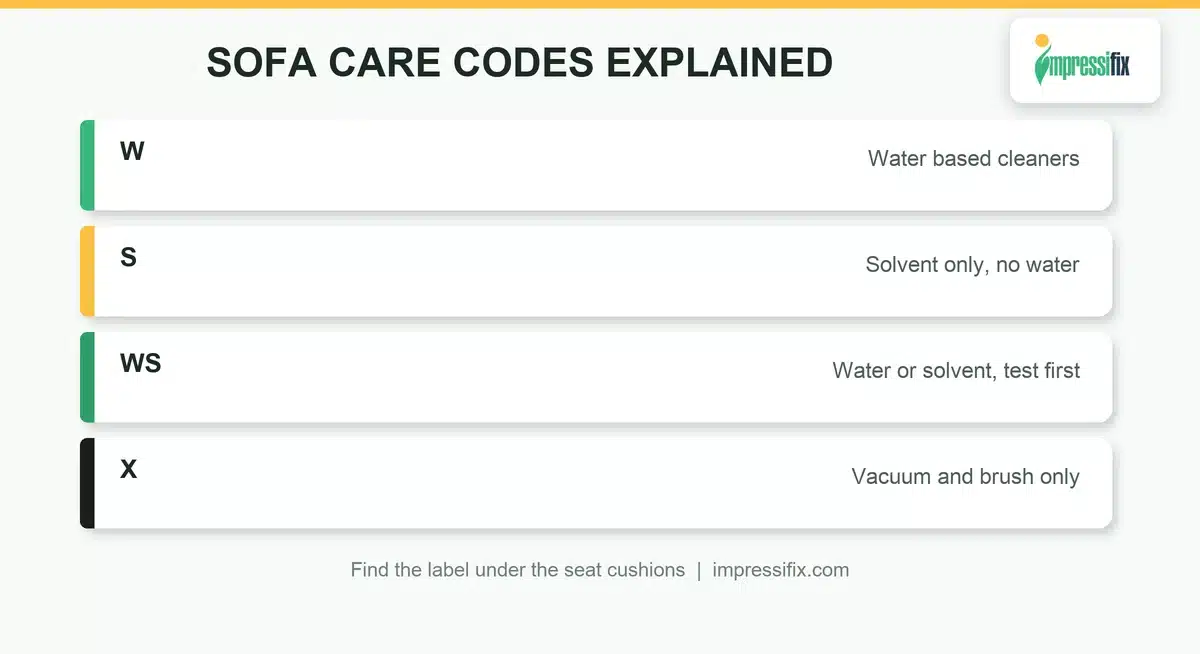
Look for the label under the seat cushions or along the base before you put any liquid on the fabric. The code tells you which cleaners are safe, and ignoring it is the most common way a sofa ends up with water rings or shrunken covers.
| Code | What it means | What to use |
|---|---|---|
| W | Water based cleaners are safe | Warm water with a little mild dish soap, applied lightly |
| S | Solvent only; water can shrink or stain it | A solvent based upholstery cleaner or rubbing alcohol, used sparingly |
| WS | Water or solvent based cleaners | Either, but always spot test first |
| X | No liquids at all | Vacuum and a soft brush only; book specialist cleaning for stains |
If there is no label, treat the sofa as delicate: vacuum it, test any cleaner on the back or underside, and use the smallest amount of liquid you can.
Want a fixed price for your home?
Tell us your home size and area and our team gets back with an exact quote, usually the same day.
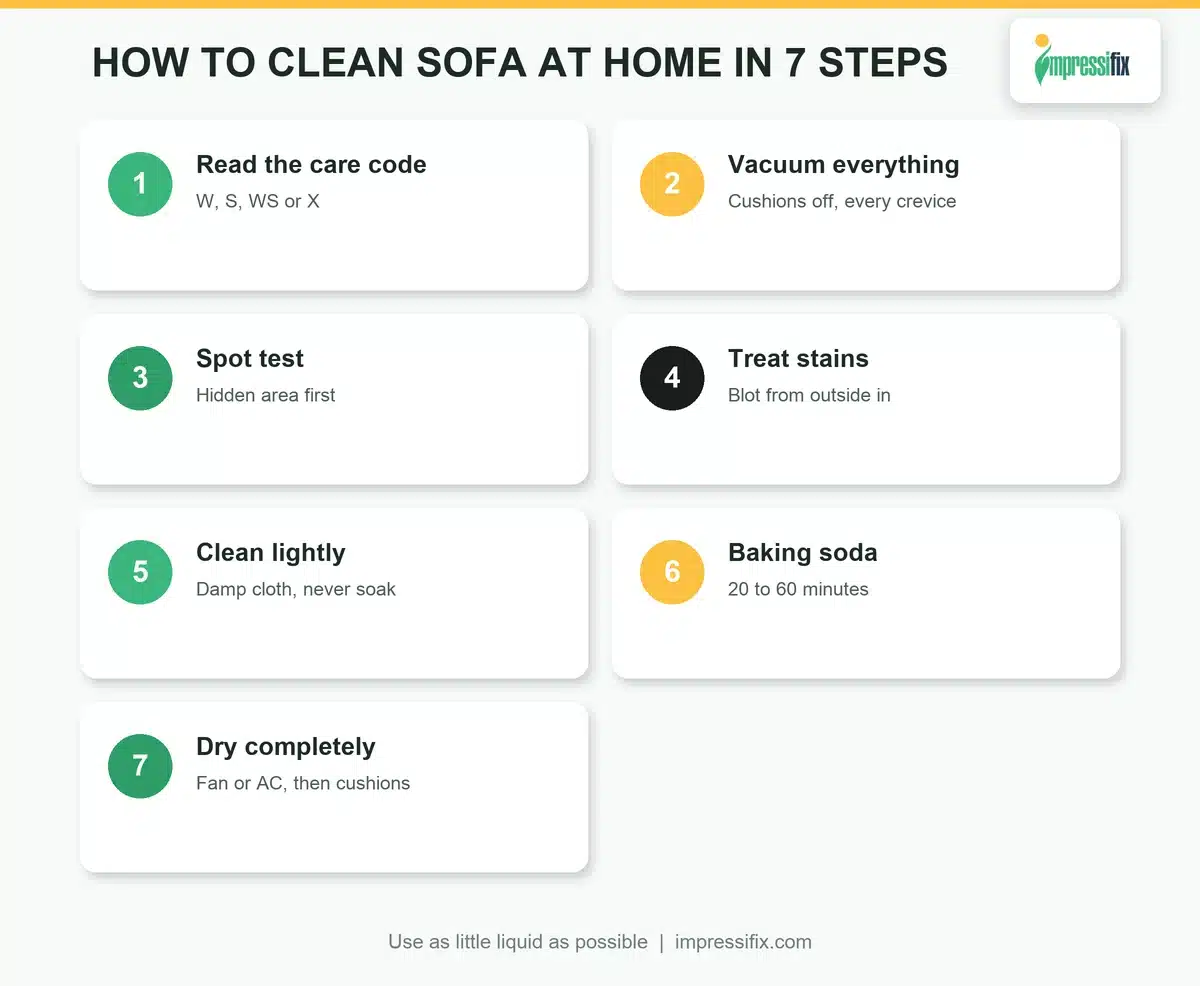
How to clean sofa at home in 7 steps
Pick a dry morning so the sofa has the whole day to dry. These steps are for fabric sofas with a W or WS code; leather and delicate fabrics are covered further down.
- Read the care code. Decide on water or solvent before you start, using the table above.
- Remove the cushions and vacuum everything. Use the upholstery brush on the seat, back, arms, base and every crevice, then vacuum both sides of each cushion. For stubborn pet hair, drag a damp rubber glove across the fabric to pull it into a pile.
- Spot test. Mix about 2 cups of warm water with 1 tablespoon of mild dish soap, dab a little on a hidden area and let it dry. Carry on only if the colour and texture are unchanged.
- Treat the stains. Work on one stain at a time with the matching solution from the stain table. Blot from the outside of the stain inwards with a clean white cloth; never scrub.
- Clean the whole surface lightly. Wring a microfibre cloth until it is only damp, wipe the fabric in sections, then go over it again with a cloth dampened in plain water to lift any soap. Never soak the fabric.
- Deodorise. Sprinkle baking soda over the dry fabric, leave it for 20 to 60 minutes (overnight for strong smells), then vacuum it off.
- Dry it completely. Open windows, run a fan or the AC, and only put the cushions back once everything is fully dry. Damp padding can smell musty, and the US EPA advises drying damp materials quickly to prevent mould.
For a quick refresh between deep cleans, steps 2 and 6 do most of the work: a thorough vacuum and baking soda lift dust and smells without any liquid at all.
How to remove sofa stains, stain by stain
Fresh stains are far easier than old ones, so blot spills straight away. Use these on W or WS fabrics, test first, and keep liquid to a minimum. For S code fabrics, use a solvent cleaner only.
| Stain | What to use | How |
|---|---|---|
| Coffee or tea | Dish soap solution, then a little white vinegar mixed with water | Blot the spill dry first, then dab and blot |
| Juice or soft drinks | Dish soap solution | Blot from the outside in, rinse with a damp cloth |
| Oil, grease or food | Baking soda or cornflour, then dish soap solution | Let the powder absorb the oil for 15 minutes, brush off, then treat |
| Ink or marker | Rubbing alcohol on a cotton pad | Dab, do not rub; test first, as it can lift dye |
| Body oil on arms and headrests | Dish soap solution or an alcohol, water and soap mix | Work in small sections and rinse well |
| Pet urine or vomit | Enzyme cleaner | Remove solids, blot, apply, let it work, then baking soda once dry |
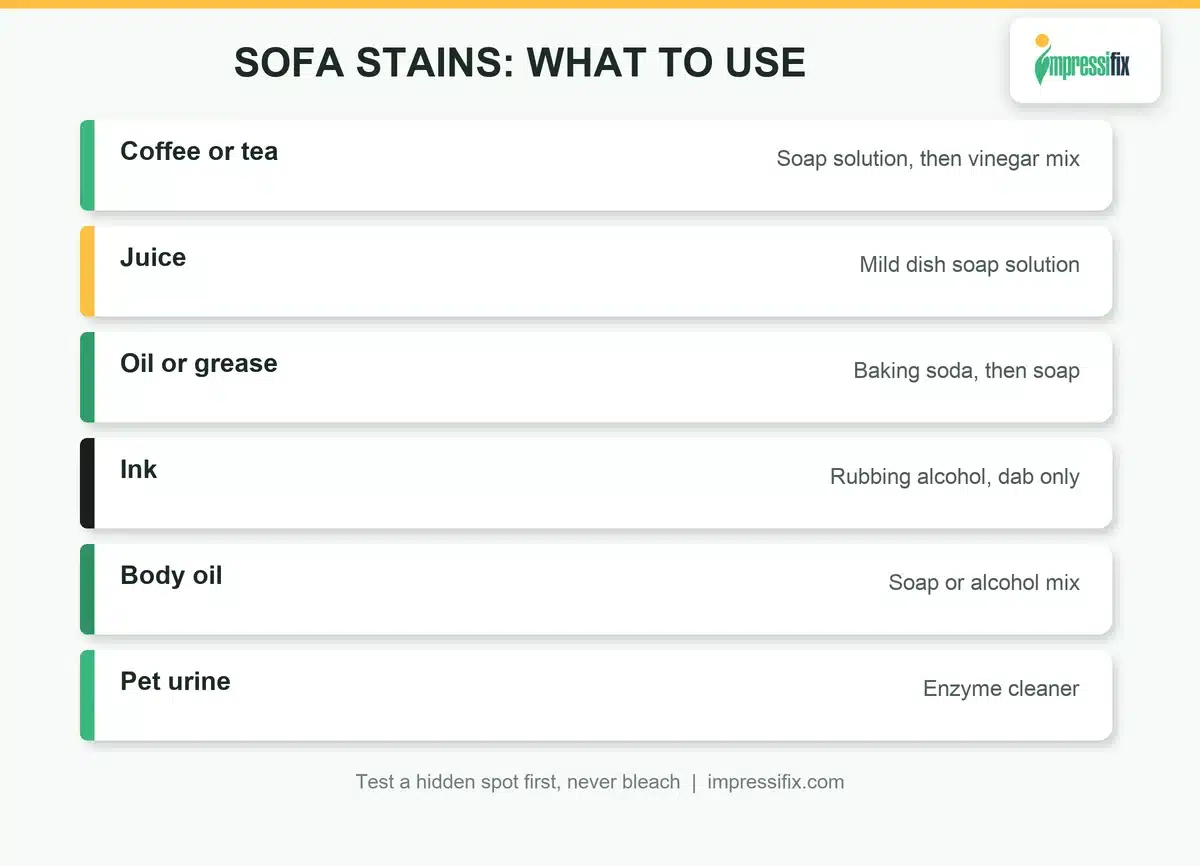
Never use bleach on upholstery, and never mix cleaning products: Health Canada warns that bleach reacts with acids such as vinegar and with ammonia to release toxic gases. If a stain is still there after two or three light treatments, stop. More liquid usually spreads the mark into the padding.
Leather, velvet and other delicate sofas
Leather sofa
Vacuum the seams first, then wipe the leather with a barely damp microfibre cloth and a few drops of mild, non detergent soap in warm water, working in small circles. Follow straight away with a cloth dampened in plain water and buff dry with a towel. Finish with a leather conditioner so the surface does not dry out and crack, which matters in UAE homes where strong sun and constant AC both dry leather.
Velvet, linen and microfibre
Velvet should be brushed in the direction of the pile and steamed only if the label allows it. Linen and cotton can shrink, so removable covers should be washed exactly as the label says, often on a cool cycle, and put back while slightly damp so they stretch into shape. Microfibre usually takes rubbing alcohol well: dab it on, let it evaporate and brush the fibres up with a soft brush.
Sofas near windows
Fabric that sits in direct sun fades and weakens faster. Turn and swap the cushions every few weeks so they wear evenly, and draw the blinds in the hottest hours.
How often to clean a sofa
A sofa that is used every day needs a little care often rather than a big clean now and then. Use this as a rule of thumb and clean more often with pets, young children or anyone with allergies at home.
| Job | How often |
|---|---|
| Brush off crumbs, plump and turn cushions | A few times a week |
| Vacuum the whole sofa, under the cushions too | Weekly |
| Spot clean spills | Straight away |
| Baking soda refresh | Monthly, or after a spill has dried |
| Full clean of the fabric (the 7 steps) | Every 6 to 12 months |
| Condition a leather sofa | Every 6 to 12 months, or as the maker advises |
Fine sand gets into UAE homes even with the windows shut, and the sofa is where much of it ends up. Our tips to reduce dust at home and our guide to cleaning a house with pets help keep the fabric cleaner between washes, and allergy friendly cleaning covers dust mites in soft furnishings.
Sofa cleaning mistakes to avoid
- Skipping the care code and using water on an S or X fabric.
- Soaking the fabric or pouring cleaner straight onto a stain.
- Scrubbing, which spreads the stain and roughens the pile.
- Using bleach, or mixing products such as bleach with vinegar.
- Putting the cushions back before the padding is completely dry.
- Using coloured cloths that can transfer dye to light fabric.
When to book sofa cleaning, and what we do
Book help when a sofa is heavily stained, smells even after a baking soda refresh, has an X code, or is velvet, silk or another fabric you do not want to risk. ImpressiFix cleans sofas and carpets, and sofa cleaning is quoted on request because the price depends on the size, the fabric and the condition. Tell us the number of seats and the fabric when you ask for a quote. To compare providers, use the 8 checks in our guide to the best sofa cleaning in Dubai, or in Sharjah, our guide to the best sofa cleaning in Sharjah.
Sofa cleaning can sit alongside a wider clean of the home. Regular cleaning is AED 45 per hour, or AED 35 per hour for visits of 4 to 8 hours, and our cleaners can bring equipment for AED 10 per hour extra. Deep home cleaning is AED 65 per hour with equipment and materials included; our guide to what is included in a deep clean shows what is covered and what is an extra. If you want the bedroom done too, read how to clean a mattress.
Frequently asked questions
What is the best way to clean a fabric sofa?
Check the care code first, then vacuum the whole sofa with an upholstery brush, including under the cushions. On a W or WS fabric, wipe it lightly with a damp microfibre cloth and a mild dish soap solution, blot stains from the outside in, rinse with plain water and let it dry fully. Our regular cleaning visits keep living rooms dust free between deeper cleans.
How can I clean my fabric sofa at home?
Use the 7 steps in this guide: read the care code, vacuum, spot test, treat stains, clean the surface with a barely damp cloth, deodorise with baking soda for 20 to 60 minutes and dry it completely with a fan or the AC. Never soak the fabric. If the label says X, vacuum only and book specialist cleaning for stains.
What can I use to wash my sofa at home?
For water safe fabrics, about 2 cups of warm water with 1 tablespoon of mild dish soap is enough; a mix of rubbing alcohol, water and a little dish soap also works on many synthetic fabrics. Baking soda handles smells and an enzyme cleaner handles pet accidents. Never use bleach, and never mix products, as Health Canada warns.
What is the best homemade solution for cleaning a couch?
Warm water with a little mild dish soap is the safest homemade cleaner for most W code fabrics, and a light mix of white vinegar and water helps with coffee and tea marks. Baking soda left on the dry fabric and vacuumed off removes smells. For gentler product choices in a home with children, see our guide to non toxic cleaning products.
Book your clean or get a quote in 60 seconds
Tell us your emirate and area, the size and fabric of your sofa, and whether you want a regular visit or a deep clean as well, and we will confirm the price. To book, sign up for an account on our site first. Our team answers Monday to Saturday, 9:30am to 7pm.