
Water above 120 mg/L of calcium carbonate counts as hard, and above 180 mg/L as very hard, under the US Geological Survey scale. You do not need a test kit to know which side of that line your bathroom sits on: a white crust on the shower head, cloudy glass a week after cleaning and chalky rings around the taps. This guide to bathroom limescale removal in UAE homes covers why it builds up so fast here, which products work on which surface, what never to mix, and when a professional descale is worth it.
For most bathrooms, the fix is a mild acid left long enough to work: diluted white vinegar or a dedicated descaler on glass, chrome and ceramic, a soft cloth rather than a scourer, then a rinse and dry. Natural stone needs a pH neutral cleaner instead, and bleach should never meet any acid.
Why limescale builds up so fast in UAE bathrooms
Limescale is mostly calcium carbonate left behind when hard water evaporates. Much of the UAE’s mains water comes from desalination, and desalinated water is typically remineralised before distribution to protect the pipes. Rooftop tanks and building pipework then add their own variation, so two towers on the same street can behave differently.
Heat speeds everything up. Hot showers, warm bathrooms and fast evaporation leave minerals behind on every surface the water touches. Australia’s national drinking water guidelines note that hardness above 200 mg/L may lead to excessive scaling of pipes and fittings, and that hard water needs more soap to lather, which is why soap scum and limescale usually turn up together.
Want a fixed price for your home?
Tell us your home size and area and a vetted team gets back with an exact quote, usually the same day.
How to remove limescale, surface by surface
The right method depends on what the scale is sitting on. Acid dissolves limescale, but the same acid can etch marble, strip coated glass or dull some finishes, so always test a small hidden area first.
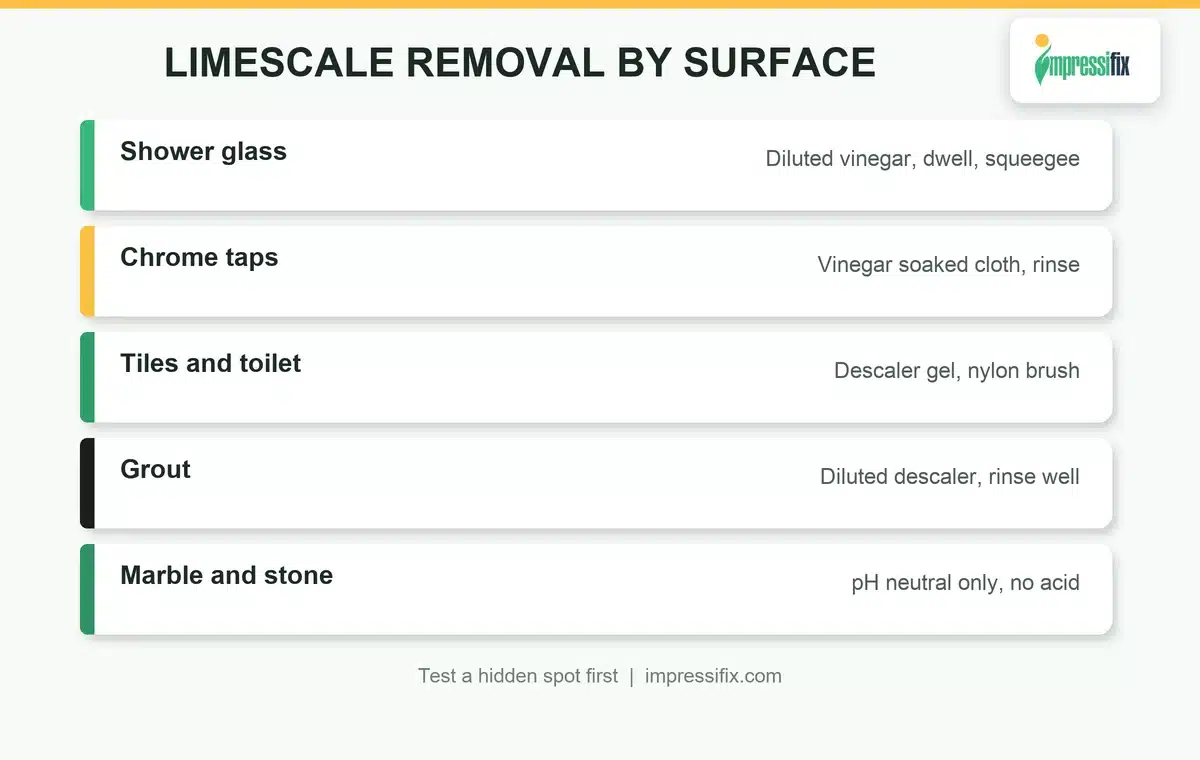
| Surface | What works | Avoid |
|---|---|---|
| Shower glass | Equal parts white vinegar and warm water, 10 to 15 minutes, then a soft cloth and squeegee | Steel wool, scouring pads, scrapers on coated glass |
| Chrome taps and shower heads | Cloth soaked in vinegar wrapped round the tap, or shower head soaked in a bag of vinegar, then rinse | Abrasive creams that scratch the plating |
| Ceramic tiles and toilet | Descaler or toilet limescale gel, left to dwell, then scrubbed with a nylon brush | Mixing a descaler with bleach |
| Grout | Diluted descaler with a grout brush, rinsed well | Long acid soaks that weaken the grout |
| Marble and natural stone | pH neutral stone cleaner and a soft cloth, dried straight away | Vinegar, lemon or any acidic descaler |
Shower glass and screens
Spray the solution generously, let it dwell, then wipe with a microfibre cloth and finish with a squeegee. For stubborn spots, a second application works better than harder scrubbing, because scratches hold scale and make the next clean harder.
Taps, shower heads and drains
Wrap taps in a vinegar soaked cloth for half an hour, or tie a bag of vinegar over the shower head so the nozzles sit in it. Brush out any loosened scale with an old toothbrush and rinse. A clear shower head also restores water pressure that limescale has quietly reduced.
Safety: never mix bleach with a descaler
This is the one rule that matters more than any technique. Health Canada warns that bleach reacts with any cleaning product containing ammonia or an acid, including vinegar, releasing toxic gases. Many toilet and limescale cleaners are acidic, so use one product at a time, rinse thoroughly between them and keep the window open or the extractor fan running.
How to stop limescale coming back
Bathroom limescale removal is far easier when the build up never gets thick. A few habits make the biggest difference:
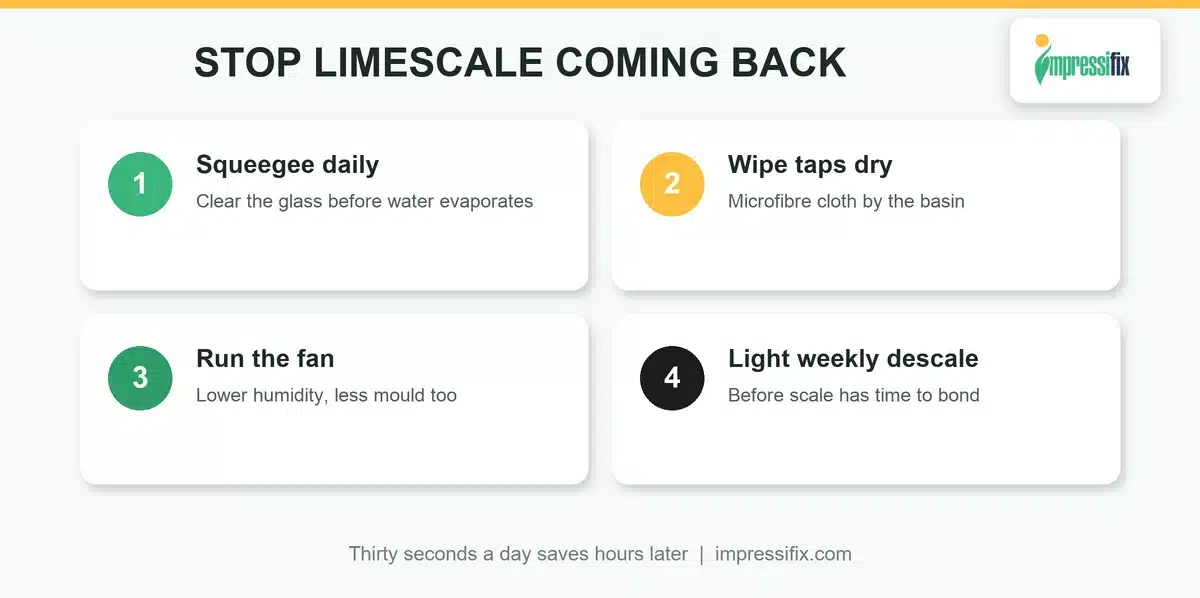
- Squeegee after every shower. Thirty seconds on the glass removes the water before it evaporates.
- Wipe taps dry. A microfibre cloth hung by the basin keeps chrome clear.
- Run the extractor fan. Lower humidity also helps prevent mould, which the US EPA advises controlling by keeping indoor humidity below 60 percent.
- Descale weekly, lightly. A quick vinegar wipe during a regular cleaning visit stops scale from bonding.
- Consider a shower filter or softener. Worth asking your building or a plumber about if scale returns within days.
When to call a professional, and typical costs
If scale has built up for months, glass has turned permanently cloudy or the grout has darkened, a professional descale, booked as a one off clean or part of a deep clean, saves hours of scrubbing and protects the surfaces. Bathroom descaling is part of every deep home cleaning visit, which typically costs AED 300 to 1,500 in Sharjah and Ajman and AED 400 to 1,800 in Dubai and Abu Dhabi depending on home size (our deep cleaning Sharjah guide lists the full scope). For bathrooms only, an hourly booking at typically AED 30 to 50 per hour is usually enough, with a heavily scaled bathroom typically taking one to two hours. Our cleaning price calculator shows the typical range for your home.
Limescale is also one of the first things landlords check at handover and new tenants notice on day one, which is why it features in our end of tenancy cleaning guide and our move in cleaning checklist. We cover homes across Sharjah, Dubai and the other emirates.
Frequently asked questions
What dissolves limescale quickly?
Mild acids dissolve limescale fastest, such as white vinegar, citric acid or a dedicated bathroom descaler. Give them 10 to 15 minutes of contact time rather than scrubbing hard, then rinse and dry. Never combine them with bleach, as Health Canada warns the mix releases toxic gas.
How do you get rid of hard water stains in a bathroom?
Spray diluted vinegar or a descaler on glass, chrome and ceramic, leave it to dwell, then wipe with a microfibre cloth and squeegee dry. Soak shower heads in a bag of vinegar and use a nylon brush on tiles and grout. If stains survive two attempts, a deep clean with professional products usually shifts them.
Is tap water in the UAE hard?
Hardness varies by emirate, building and even tank, but white deposits on taps and glass are a sign your water sits in the hard range. The USGS classes water above 120 mg/L as hard. An inexpensive test strip will tell you your own figure.
Does vinegar remove limescale?
Yes. White vinegar is a mild acid that dissolves light to moderate limescale on glass, chrome and ceramic, especially when left on for 10 to 15 minutes. Do not use it on marble or other natural stone, which acid can etch.
How do I stop limescale building up in my shower?
Squeegee the glass and wipe the taps after each shower so water cannot evaporate and leave minerals behind. A light weekly descale stops scale from bonding, and a regular cleaner can build it into every visit. A shower filter helps in buildings where scale returns within days.
Book your clean or get a quote in 60 seconds
Tell us how many bathrooms you have, your area and how long the limescale has been building, and we will confirm a fixed price and a vetted cleaner with the right descaling products.