
How to clean greasy kitchen cabinets without damaging them: dust them dry first, then wash the doors from the top down with warm water and a few drops of dish soap on a well wrung microfibre cloth. Let the soapy water sit for a minute on the sticky spots, rinse with a clean damp cloth and dry each door straight away.
The cabinets beside and above the hob take the most grease in any kitchen. Every time you fry, a fine mist of oil settles on the doors, and in the UAE the dust that blows in on windy days sticks to it, so the film turns tacky and darker every week. Cooking is also, by far, the leading cause of home fires, according to the U.S. Fire Administration, which is one more reason not to let grease build up around the cooker.
This guide on how to clean greasy kitchen cabinets covers what you need, 6 steps, the right method for each finish, how to shift years of build up and how often to do it. For the rest of the room, our kitchen cleaning checklist sets out the daily, weekly and monthly tasks.
What you need to clean greasy cabinets
Most greasy cabinets come clean with things you already have in the kitchen. Start with the mildest option and only move up if the grease does not shift.
| Item | What it does | Tip |
|---|---|---|
| Dish soap and warm water | Breaks down fresh and medium grease on almost every finish | A few drops in a bowl is enough; too much leaves a film |
| Three microfibre cloths | One to wash, one to rinse, one to dry | Wring the washing cloth until it is only damp |
| Baking soda | A gentle paste for stubborn spots, edges and handles | Mix with a little water or dish soap; rub softly, never scrub hard |
| White vinegar | Mixed half and half with warm water, cuts light build up on hard finishes | Not on oiled wood or near marble worktops |
| Soft toothbrush | Grooves, panel edges, hinges and around handles | Dip it in the soapy water, not the paste, for painted doors |
| Kitchen degreaser (optional) | Heavy, old grease that soap will not lift | Test it first and follow the label |
Want a fixed price for your home?
Tell us your home size and area and our team gets back with an exact quote, usually the same day.
How to clean greasy kitchen cabinets in 6 steps
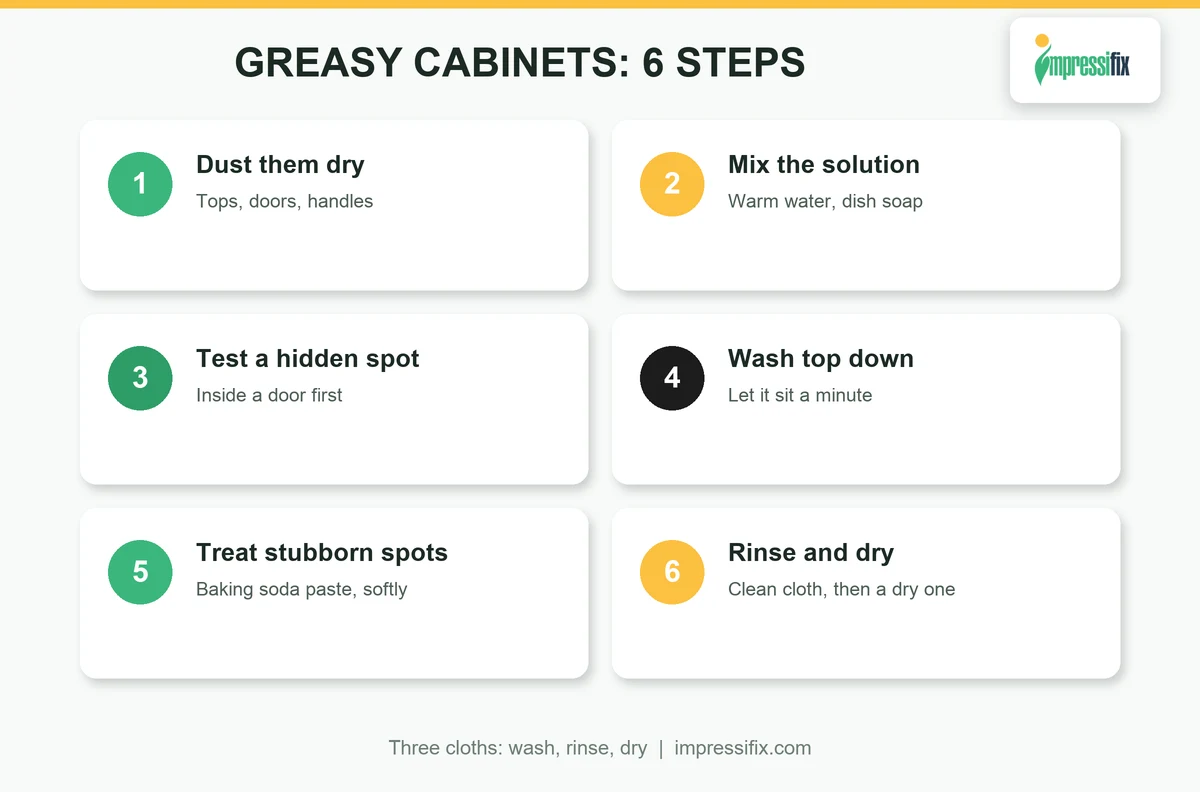
- Dust them dry first. Wipe or vacuum the tops of the wall cabinets, the doors and the handles with a dry cloth. Dry crumbs and sand turn into a muddy paste once they get wet.
- Mix the solution. Add a few drops of dish soap to a bowl of warm water. Keep a second bowl of clean warm water for rinsing.
- Test a hidden spot. Try the solution on the inside of a door or a low corner and check that the finish does not dull, lift or change colour.
- Wash from the top down. Wipe each door with a well wrung cloth, let the soapy water sit for a minute on sticky areas, then wipe again. Work from the top of the cabinet down so drips land on parts you have not cleaned yet.
- Treat the stubborn spots. Rub a little baking soda paste onto spots that stay tacky, using a soft cloth or a soft toothbrush along edges and around handles, then wipe the paste away.
- Rinse and dry. Wipe every door with the clean damp cloth to remove soap and paste, then dry it straight away with the third cloth. Water left in joints and hinges can swell the board underneath.
A row of wall and base units takes about 30 to 60 minutes this way. The doors on either side of the hob and the cabinet above the extractor usually take as long as the rest of the kitchen together, so start there while your cloths are fresh.
The right method for each cabinet finish
Kitchen cabinets in UAE flats and villas come in several finishes, and the wrong product can do more harm than the grease. Check what yours are made of before you start:
| Finish | How to clean it | Avoid |
|---|---|---|
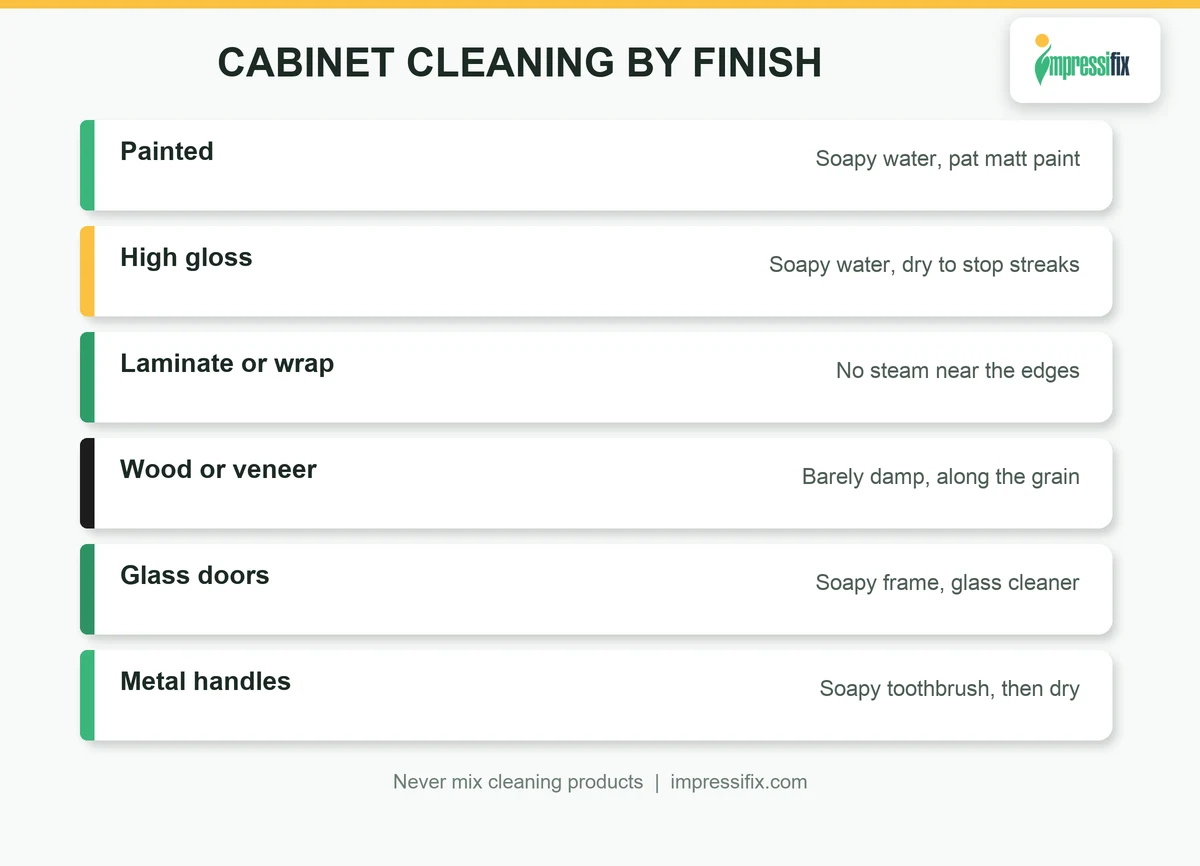
| Painted (matt or satin) | Dish soap and warm water, a soft cloth, pat rather than rub on matt paint | Scouring pads and melamine sponges, which leave shiny patches |
| High gloss or lacquered | Dish soap and warm water, then dry with a clean microfibre to stop streaks | Baking soda rubbed hard, which can leave fine scratches |
| Laminate or vinyl wrapped (thermofoil) | Dish soap and warm water; diluted vinegar for light build up | Steam and very hot water near edges, which can lift the wrap |
| Solid wood or wood veneer | Dish soap and warm water on a barely damp cloth, along the grain, dry at once | Soaking, vinegar on oiled wood, and bleach |
| Glass fronted doors | Soapy water on the frame, glass cleaner or diluted vinegar on the glass | Spraying cleaner straight into the hinges |
| Metal handles and rails | Soapy toothbrush around the fixings, then dry to stop water marks | Wire wool and abrasive powders |
If you are not sure what the doors are, treat them as the most delicate finish on the list: soapy water, a soft cloth and a dry cloth straight after.
How to remove years of grease build up
Old grease that has turned dark, sticky or hard needs softening before it will wipe off. Work in small sections and be patient rather than scrubbing harder.
- Warm it first. Hold a cloth wrung out in hot water against the spot for a minute, or warm it with a hairdryer on a low setting. Warm grease lets go far more easily.
- Use oil to lift oil. A few drops of cooking oil mixed with baking soda into a paste loosens hardened grease. Rub it in gently, wipe it off, then wash the area with dish soap and warm water to remove every trace of oil.
- Repeat rather than scrub. Two or three gentle rounds of soapy water and paste are kinder to the finish than one hard scrub with an abrasive pad.
- Use a degreaser last. If nothing else works, use a kitchen degreaser made for the surface. Test it inside a door, open a window and follow the label.
Never mix cleaning products to make them stronger. Health Canada warns that mixing bleach with other cleaning products, such as ammonia or vinegar, can release toxic gases. Rinse each product off before you try the next one.
What not to do on greasy cabinets
- No abrasive pads or wire wool. They strip paint, scratch gloss and wear through vinyl wrap.
- No soaking. Most cabinet doors are MDF or chipboard under the finish; water in the joints makes them swell.
- No bleach. It does not cut grease and it can mark wood and painted finishes.
- No steam cleaner on laminate or wrapped doors. Heat and moisture can lift the edges.
- No vinegar on stone. If your worktop is marble, keep vinegar drips off it, as acids etch natural stone.
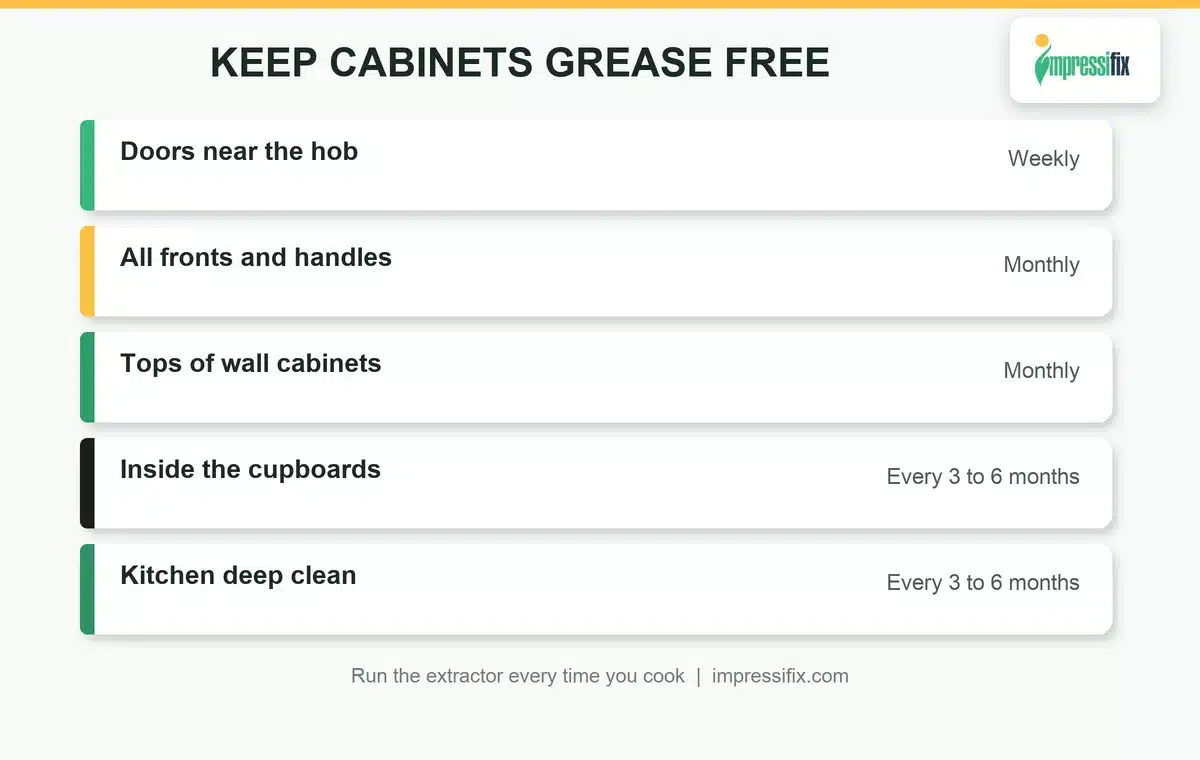
How to keep kitchen cabinets grease free
| Task | How often |
|---|---|
| Wipe the doors and handles beside and above the hob | Weekly, or after a lot of frying |
| Wash all cabinet fronts and handles with soapy water | Monthly |
| Wipe the tops of the wall cabinets | Monthly |
| Empty and wipe inside the cupboards | Every 3 to 6 months |
| Kitchen deep clean, including the extractor and tiles | Every 3 to 6 months, more often in a busy family kitchen |
Run the extractor fan every time you cook and for a few minutes after, and keep its filter clean, because a clogged filter sends the grease straight onto your cabinets. A lid on the frying pan helps too. Our guide on how to clean an oven covers the other grease trap in the kitchen.
When to book a kitchen deep clean
If the cabinets, hob, tiles and extractor all need work at once, a deep clean is quicker than tackling them over several weekends. A kitchen only deep cleaning service is AED 65 per hour with equipment and materials included, and a typical apartment kitchen takes 3 to 5 hours, about AED 195 to 325. A full home deep clean takes longer; our guide on how long a deep clean takes lists the hours by home size.
For lighter upkeep, regular cleaning is AED 45 per hour, or AED 35 per hour for visits of 4 to 8 hours; use your own products or add AED 10 per hour for our cleaners to bring equipment. In Sharjah, our kitchen deep cleaning Sharjah guide explains what a kitchen deep clean covers zone by zone. If you prefer gentler products at home, see our guide to non-toxic cleaning products.
Frequently asked questions
What is the best thing to clean greasy kitchen cabinets with?
Warm water with a few drops of dish soap is the best place to start, because it cuts kitchen grease and is safe on almost every finish. Use a well wrung microfibre cloth, rinse with a clean damp cloth and dry straight away. Move up to a baking soda paste or a kitchen degreaser only for spots that soap will not shift.
How do you get grease off cabinets without removing finish?
Use the mildest cleaner that works, test it on a hidden spot first and use soft cloths rather than scouring pads or melamine sponges. Warm the grease with a hot damp cloth so it lifts without hard rubbing, then rinse and dry each door. Our kitchen cleaning checklist shows how often to wipe the doors so grease never gets that thick.
How do you remove years of grease buildup?
Soften it first with heat, using a cloth wrung out in hot water or a hairdryer on a low setting, then work in small sections with dish soap or a paste of baking soda and a few drops of cooking oil. Wash the oil away afterwards with soapy water and dry the doors. For very old grease, a tested kitchen degreaser or a professional deep clean saves a lot of time.
What is the best homemade degreaser for kitchen cabinets?
For most cabinets, warm water with a little dish soap works best, with a baking soda paste for stubborn spots. On hard finishes such as laminate or glass, equal parts white vinegar and warm water also cut light build up. Never mix vinegar or ammonia with bleach; Health Canada warns that it can release toxic gases.
Book your clean or get a quote in 60 seconds
Tell us your home size, your area and whether you want the kitchen only or the whole home, and send a photo of the cabinets if the grease is heavy. We will confirm the hours and the price before you commit. To book, sign up for an account on our site first. Our team answers Monday to Saturday, 9:30am to 7pm.