Here is how to clean marble floors without damage: dust mop the sand off first, mop with a few drops of a pH neutral cleaner in warm water, keep the mop barely damp, rinse with plain water and buff the floor dry. Marble is a calcareous stone, made mainly of calcium carbonate, and the Natural Stone Institute explains that calcium carbonate is sensitive to acidic solutions, so it recommends mild, non acidic cleaners. That one fact rules out vinegar, lemon and most limescale removers, the three things people reach for first.
In practice, a marble floor needs less effort than most people think, as long as you use the right cleaner and very little water. This guide covers the 7 steps, a stain by stain table, how to bring back the shine, a care schedule and the products to keep off the stone. For the right cleaner in every other room, see our guide to the best cleaning products, which includes a by room table.
Why marble floors need gentle cleaning
Marble is soft and porous compared with porcelain or granite. Two things damage it: acids, which eat into the polished surface, and grit, which scratches it. Acid damage is called etching. It looks like a dull, lighter patch or ring, and it is not a stain at all: the surface itself has been dissolved, so no cleaner will remove it.
| Safe on marble | Not safe on marble |
|---|---|
| A pH neutral stone cleaner or stone soap | Vinegar, lemon juice and citrus cleaners |
| A few drops of mild washing up liquid in warm water | Limescale removers, descalers and acidic bathroom sprays |
| A soft microfibre mop or clean rag mop | Abrasive powders, creams and scouring pads |
| A dry dust mop or soft broom | Bleach and ammonia on polished marble, and never mixed together |
| Distilled or filtered water if your tap water leaves spots | A soaking wet mop or standing water |
If you are not sure whether a floor is marble or a look alike tile, test any cleaner in a corner first. Marble often shows veins that run right through the stone and feels cool underfoot; porcelain tiles that look like marble are far tougher and tolerate more.
Want a fixed price for your home?
Tell us your home size and area and our team gets back with an exact quote, usually the same day.
How to clean marble floors in 7 steps
This routine works for polished and honed marble in UAE homes. Do it weekly, or more often in busy rooms, and dust mop in between.
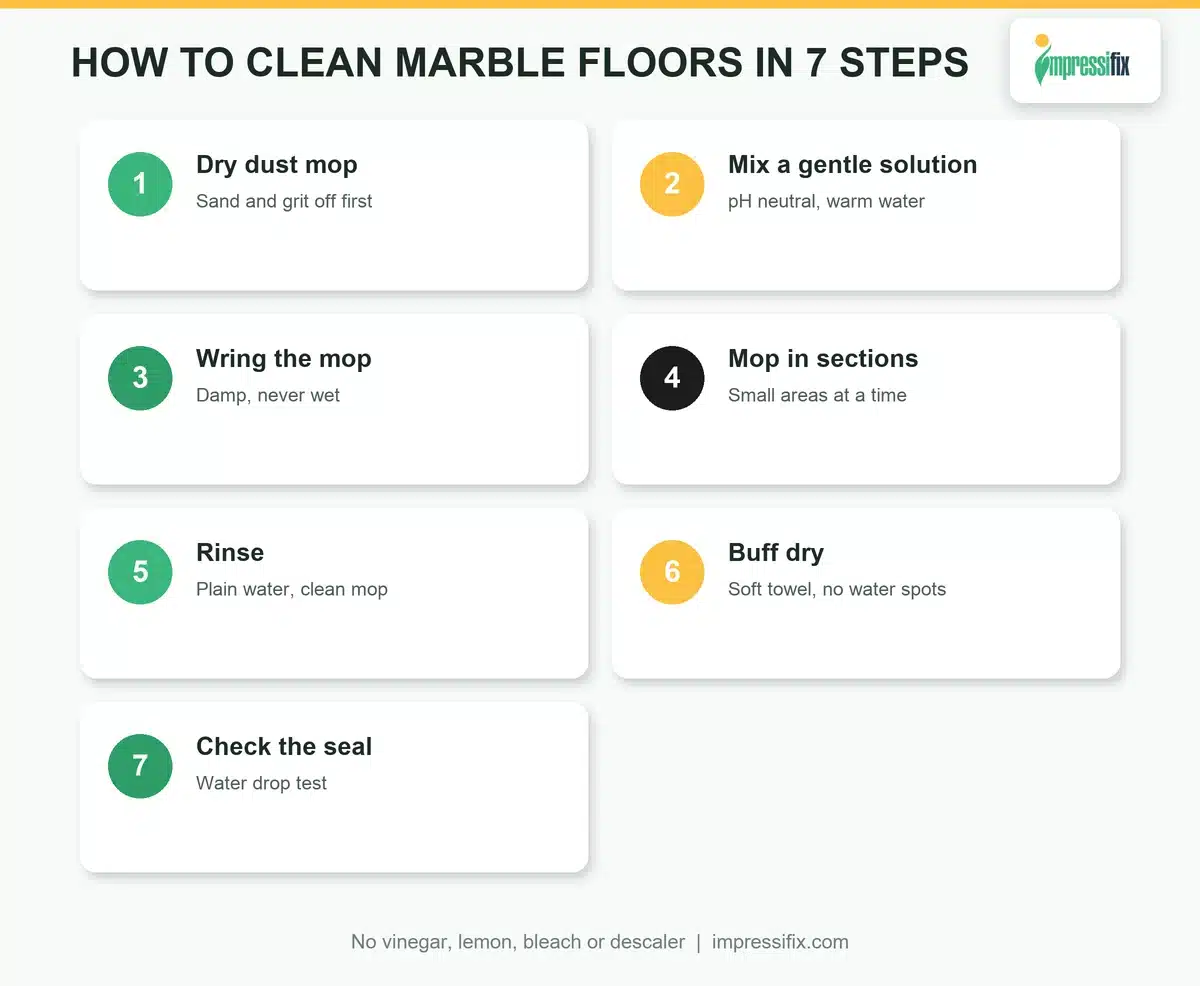
- Dust mop first. Remove sand, dust and grit with a dry microfibre dust mop or a soft broom. The Natural Stone Institute warns that sand, dirt and grit are abrasive and can damage natural stone, and fine sand gets into every UAE home.
- Mix a gentle solution. Add a few drops of a pH neutral stone cleaner, or mild washing up liquid, to a bucket of warm water. More soap is not better: too much leaves a film and streaks.
- Wring the mop well. Use a soft microfibre or rag mop and wring it until it is only damp. Excess water can soak into the stone and the grout.
- Mop in small sections. Work from the far side of the room back to the door, so you never walk on the wet floor.
- Rinse. Go over each section with a second mop dampened in plain water, to lift any soap residue. Change the rinse water often.
- Buff dry. Dry the floor straight away with a soft towel or a dry microfibre pad. This stops water spots and brings up the shine.
- Check the seal. Every few months, drop a little water on the floor in a quiet corner. If it soaks in and darkens the stone instead of beading, ask a stone specialist about resealing.
On a busy day, steps 1 and 6 alone do most of the work: a dry dust mop and a quick buff keep marble looking clean without any liquid.
Marble floor stains and what to use
Blot spills straight away with a soft cloth; wiping spreads them. Acidic drinks such as juice, coffee and soft drinks should never be left to sit. Test every treatment in a hidden spot first.
| Stain | What to use | How |
|---|---|---|
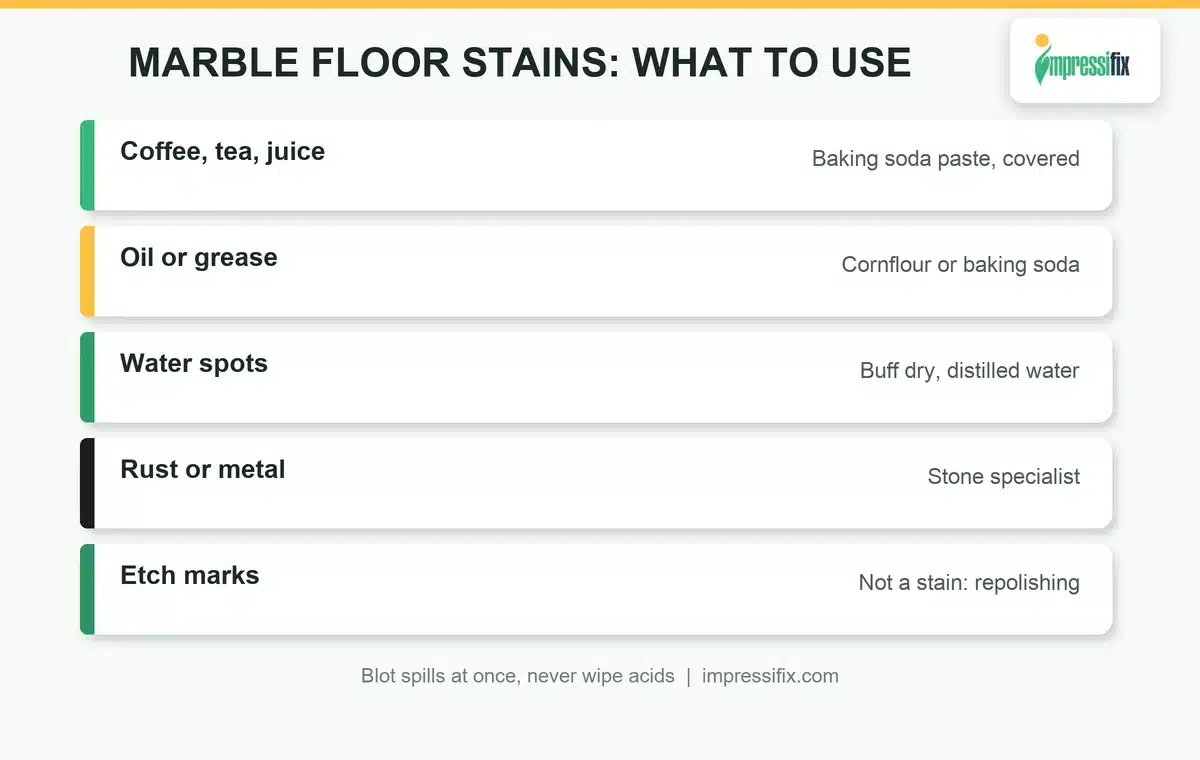
| Coffee, tea, juice or food | Paste of baking soda and water | Spread it over the mark, cover with cling film, leave for a few hours or overnight, then rinse and dry |
| Oil, grease or cosmetics | Cornflour or baking soda, then mild soap | Leave the powder to absorb the oil for up to 24 hours, sweep it up, then wash with the gentle solution |
| Water spots and rings | A dry, soft buffing cloth | Buff the spot dry; use distilled water for mopping if your tap water leaves marks |
| Rust or metal marks | A stone specialist | Deep rust stains are hard to remove and can be permanent, so do not try acids |
| Etch marks (dull patches) | Repolishing by a stone restorer | Etching is surface damage, not a stain; cleaning will not fix it |
Never treat a marble stain with a rust remover or toilet cleaner. The Natural Stone Institute notes that many rust removers contain traces of hydrofluoric acid, which attacks every stone, even granite.
How to make your marble floor shine again
Most dull marble is not worn out; it is covered in a film of soap, hard water or dust. Before you buy anything, try this:
- Strip the film. Mop once with plain warm water, then rinse and buff dry. If the floor looks brighter, you were using too much cleaner.
- Buff, do not wax. Wax and oily polishes trap dirt and make marble slippery. A clean, dry microfibre pad on a flat mop gives most of the shine back.
- Use distilled water. White spots come from the dissolved calcium and magnesium that make water hard, as the USGS explains. If your water leaves white spots, mop with distilled or filtered water for a few weeks and see the difference.
- Call a stone restorer for etching. If the floor is dull in patches, near the kitchen or where drinks spill, the surface is etched. Honing and repolishing are stone restoration jobs done with special machines.
Sealing helps too, but it does not make marble stain proof. The Natural Stone Institute says sealers make stone more stain resistant rather than stain proof, and some stones do not need sealing at all, so ask your stone supplier before you reseal.
A marble floor care schedule
| Job | How often |
|---|---|
| Dust mop sand and grit | Daily in busy rooms, every few days elsewhere |
| Blot spills | Straight away |
| Damp mop with a pH neutral cleaner, rinse and buff dry | Weekly |
| Wash entrance mats and check felt pads under furniture | Monthly |
| Water drop test for the seal | Every 3 to 6 months |
| Reseal, if your stone needs it | Every 6 to 12 months, or as your stone supplier advises |
Sand is the biggest risk in the UAE, so keep mats inside and outside every door and dust mop after a windy day. Our tips to reduce dust at home and our guide to cleaning after a sandstorm help protect the stone between washes.
Products to keep off marble floors
Most marble damage happens in the bathroom and kitchen, where strong cleaners are close at hand. A limescale spray used on the shower glass can drip onto a marble floor and leave dull spots, so the method in our bathroom limescale removal guide is for glass, taps and tiles, never for the stone. Our bathroom cleaning checklist shows what to clean in which order.
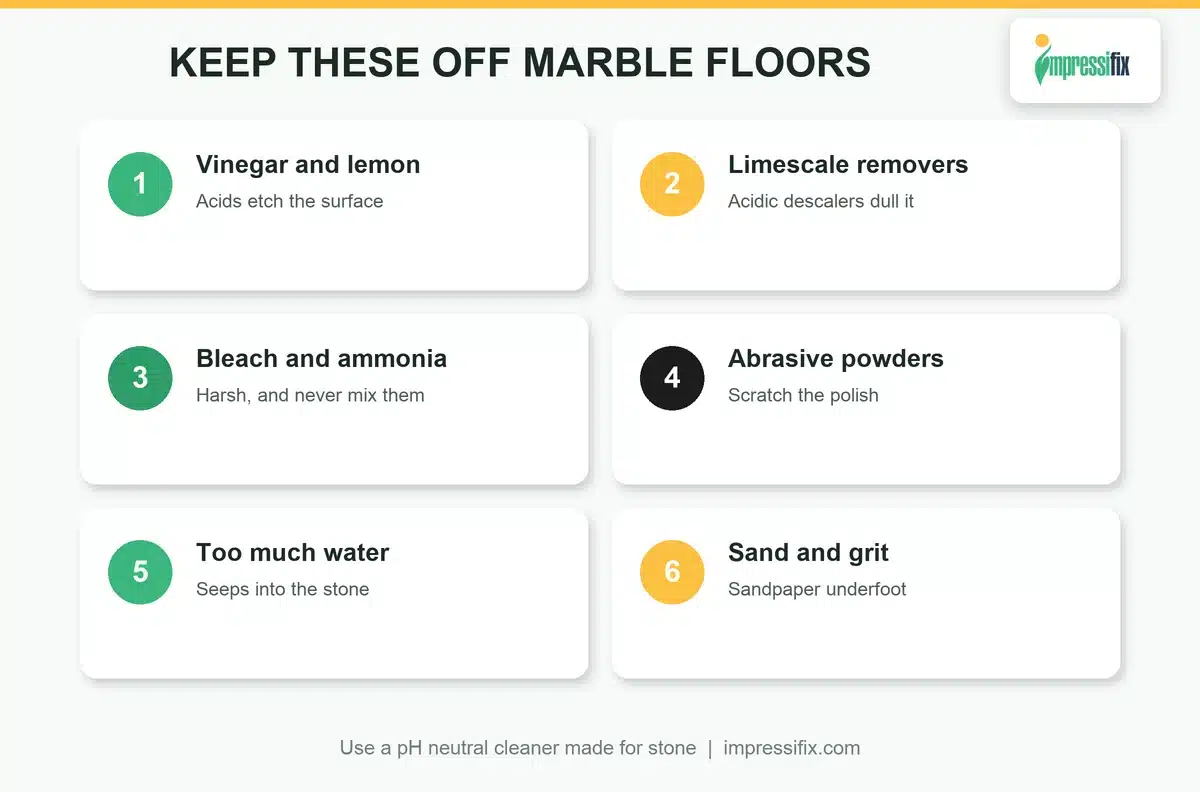
Never mix cleaning products while you work: Health Canada warns that bleach reacts with acids and ammonia to release toxic gases. Steam mops are best avoided too, unless your stone supplier says your marble can take the heat and moisture.
When to book help with marble floors
Marble is common in villas and in the lobbies, bathrooms and living rooms of many UAE apartments, and it is easy to damage in a rush. When you book, tell us which floors are marble so we can confirm what is possible, and leave out any stone cleaner you prefer us to use.
A deep home cleaning visit is AED 65 per hour with equipment and materials included; our guide to how long a deep clean takes gives typical hours by home size. Regular cleaning is AED 45 per hour, or AED 35 per hour for visits of 4 to 8 hours, and our cleaners can bring equipment for AED 10 per hour extra. Stone repolishing and sealing are specialist restoration jobs, not part of a clean.
Frequently asked questions
What is the best thing to clean a marble floor with?
A pH neutral cleaner made for stone, or a few drops of mild washing up liquid in warm water, applied with a soft, well wrung microfibre mop. Rinse with plain water and buff the floor dry. The Natural Stone Institute recommends mild, non acidic cleaners because marble is sensitive to acids.
How can I clean marble floors at home?
Dust mop the sand and grit off first, then damp mop small sections with a gentle pH neutral solution, rinse with a second mop in plain water and dry the floor with a soft towel. Avoid vinegar, lemon, bleach and limescale removers. For a full reset of the home, our deep home cleaning includes equipment and materials.
How do I make my marble floor shine again?
Remove the film first: mop with plain warm water, rinse and buff dry with a clean microfibre pad, which often brings back most of the shine. Switch to distilled water if your tap water leaves spots, and skip wax. Dull patches that do not change are etching, which needs repolishing by a stone restorer.
What is the best cleaning solution for marble flooring?
A ready made pH neutral stone cleaner is the simplest choice; a homemade mix of warm water and a few drops of mild washing up liquid also works for weekly mopping. Keep the solution weak, because too much soap leaves streaks. See our guide to the best cleaning products for the right cleaner in every room.
Book your clean or get a quote in 60 seconds
Tell us your emirate and area, the size of your home and which floors are marble, and we will confirm the hours and the price before you commit. To book, sign up for an account on our site first. Our team answers Monday to Saturday, 9:30am to 7pm.