How to clean outdoor furniture in the UAE comes down to three enemies: fine sand, strong sun and, near the coast, salty and humid air. After a long summer under covers or in the heat, most garden chairs, loungers and cushions need a proper clean before the cooler months bring everyone back outside. This guide shows how to clean outdoor furniture in seven steps, the right method for metal, wood, rattan, plastic and glass, how to deal with dirty or mouldy cushions, and how often to do it.
In short: to clean outdoor furniture, brush off the dry sand first, wash with warm water and a mild soap, rinse well, then dry fully in the sun. Treat each material differently: no harsh scrubbing on aluminium or glass, oil only on hardwood, and a soft brush on rattan. Wash cushion covers on a gentle cycle and dry them completely before you put them back.
What you need before you start
Most outdoor furniture needs nothing more than a few basics. Check the care label or the maker’s instructions first, especially for cushions and treated wood, because some finishes do not like strong cleaners.
| Item | What it is for |
|---|---|
| Soft brush and a hand vacuum | Lifting dry sand and dust before any water touches the furniture |
| Bucket, warm water and mild washing up liquid | The everyday wash for almost every material |
| Microfibre cloths and a non scratch sponge | Wiping frames, tables and glass without leaving marks |
| Soft bristle scrubbing brush | Rattan weave, textured plastic and wood grain |
| Garden hose with a gentle spray | Rinsing off soap and loosened grit |
| White vinegar | Light mildew spots and water marks on glass |
| Gloves | Protecting your hands when scrubbing or using any stronger cleaner |
Want a fixed price for your home?
Tell us your home size and area and our team gets back with an exact quote, usually the same day.
How to clean outdoor furniture in 7 steps
This order works for a whole terrace or garden furniture set. Choose a cooler morning or late afternoon: in strong midday sun the soap dries on the surface before you can rinse it and leaves streaks.
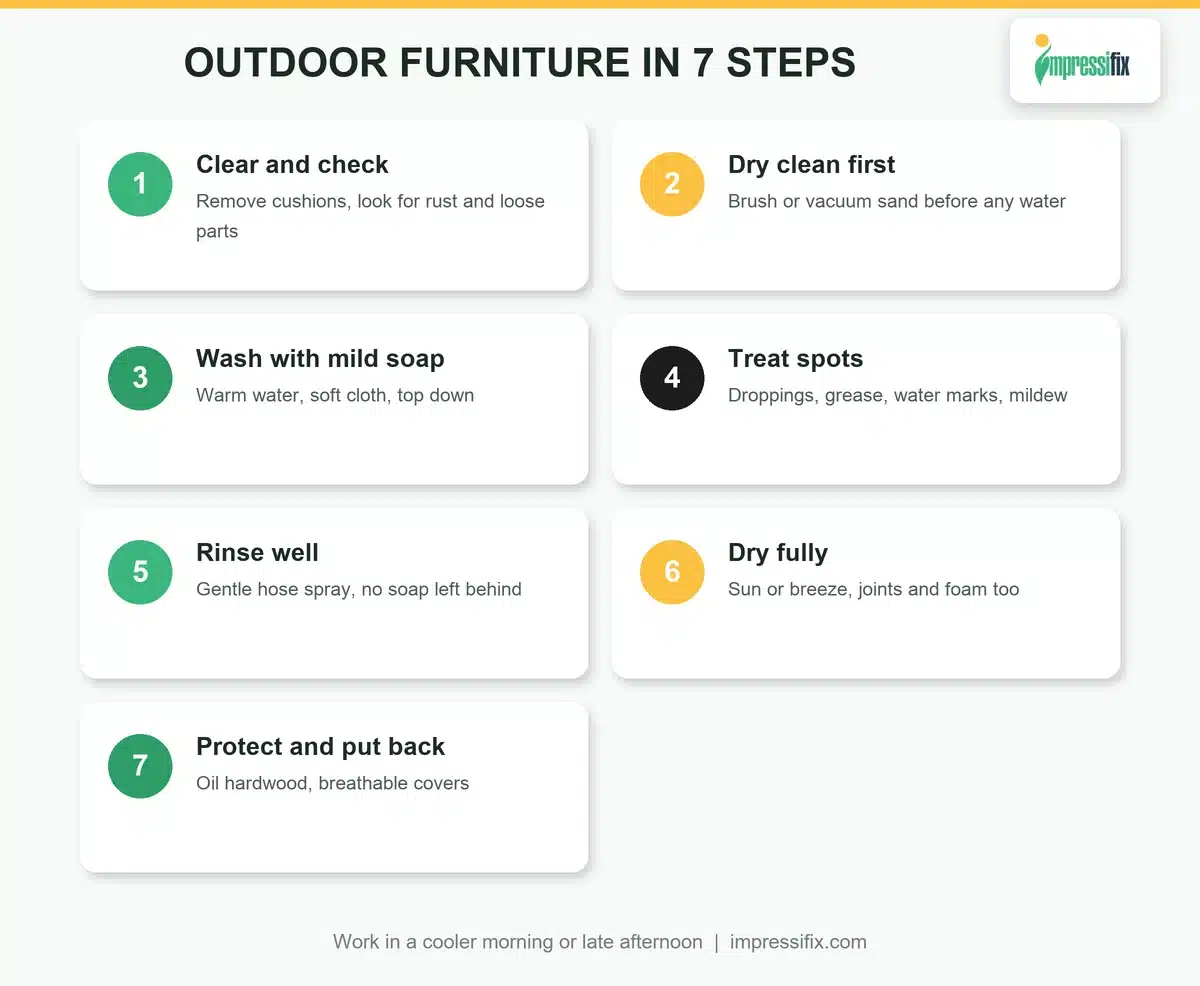
- Clear and check. Take off cushions, covers and anything loose. Look for rust spots, loose screws, cracked plastic or split weave, so you know where to be gentle.
- Dry clean first. Brush or vacuum the sand and dust off every surface, including under seats and inside the weave. Water turns fine sand into a gritty paste that scratches.
- Wash with mild soap. Mix a few drops of washing up liquid in a bucket of warm water and wipe each piece with a cloth or soft brush, working from the top down.
- Treat spots. Use the material method below for bird droppings, grease from a barbecue, water marks or mildew.
- Rinse well. Hose off all soap with a gentle spray. Soap left on the surface attracts dust again.
- Dry fully. Wipe off excess water and leave the furniture in the sun or a breeze until it is completely dry, especially joints, wood and cushion foam.
- Protect and put back. Oil hardwood if it needs it, put dry cushions back and use breathable covers when the furniture is not in use.
How to clean outdoor furniture by material
The basic wash is the same, but each material has its own rules. Getting these right is what keeps garden furniture looking good for years instead of one season.
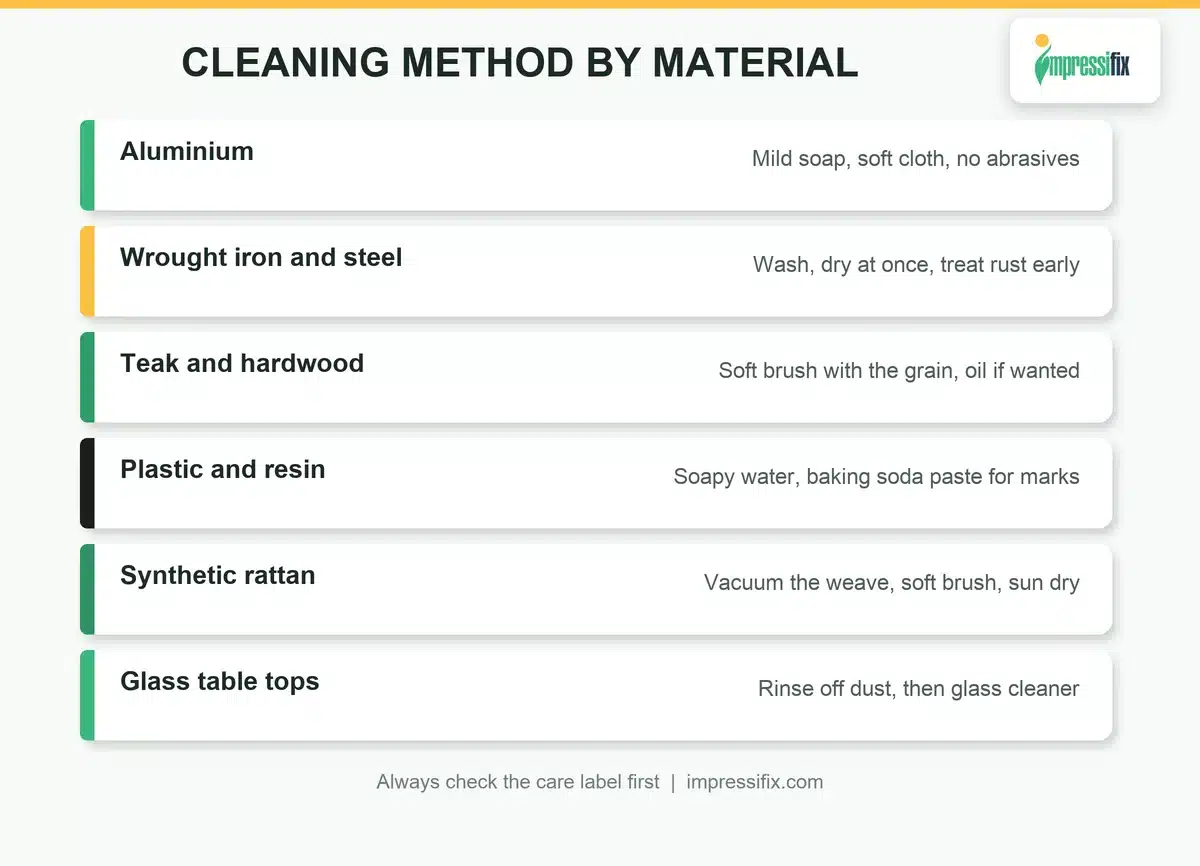
| Material | Best method | Avoid |
|---|---|---|
| Aluminium | Warm soapy water and a soft cloth; a vinegar and water mix for dull spots | Steel wool, abrasive pads, strong alkaline cleaners |
| Wrought iron and steel | Soapy wash, then dry at once; rub light rust with a wire brush and touch up the paint | Leaving it wet, standing in water or on wet grass |
| Teak and hardwood | Soft brush along the grain with mild soap; oil or seal only if you want to keep the colour | Strong pressure washing, which lifts the grain |
| Plastic and resin | Soapy water and a soft brush; a paste of baking soda and water for marks | Bleach on coloured plastic, scouring powders |
| Synthetic rattan and wicker | Vacuum the weave, then a soft brush with soapy water; rinse and dry in the sun | Soaking natural wicker, stiff brushes that fray the weave |
| Glass table tops | Wash the dust off first, then glass cleaner or vinegar and water with a microfibre cloth | Wiping dry sand across the glass |
Metal: aluminium, iron and steel
Aluminium does not rust, but it can go dull and chalky in the sun. A soft cloth, mild soap and a final wipe with a dry cloth are usually enough. Iron and steel frames are different: water sitting in the joints is what starts rust, so dry them straight after washing, and deal with any rust spot while it is small.
Teak and other hardwoods
Teak outdoor furniture left alone turns a silver grey, which is a natural change, not dirt. If you prefer the warm colour, clean it with a soft brush and mild soap, let it dry for a day, then apply a teak oil or sealer as the maker suggests. A harsh pressure wash may look quick, but it roughens the surface and makes it collect more dirt.
Rattan, wicker and plastic
Most garden rattan in the UAE is synthetic, which handles water well. The hard part is the sand that settles inside the weave, so vacuum it first, then scrub gently in the direction of the weave. Plastic and resin chairs clean up well with soapy water; for grey marks, a paste of baking soda and water on a soft cloth works without scratching.
How to clean outdoor cushions and covers
Outdoor cushions collect sand, sun cream, food and, if they stay damp, mildew. Always check the care label before you start.
- Removable covers: shake or vacuum them, zip them closed and wash on a gentle, cool cycle if the label allows. Dry them in the shade or on a low setting, then put them back on the foam while still slightly damp so they keep their shape.
- Covers that do not come off: vacuum both sides, then sponge with warm soapy water, working into the fabric with a soft brush. Rinse with a light spray and stand the cushion on its side to drain and dry.
- Mould and mildew: brush off as much as you can outside, so spores do not spread indoors, then clean the area with soapy water or a vinegar and water mix and dry the cushion fully in the sun. Never mix bleach with vinegar or ammonia. Heavy mould inside the foam usually means it is time to replace the insert.
Damp is the real cause of mildew, so the fix is to keep outdoor cushions dry: store them indoors or in a ventilated box when not in use and after rain or heavy dew. The US EPA’s brief guide to mould, moisture and your home explains that the key to mould control is moisture control, and it suggests keeping indoor humidity below 60 percent, which matters for cushions stored in a closed room over summer.
UAE outdoor furniture care: sand, sun and salt air
Outdoor furniture here faces conditions that most foreign care guides never mention. A few habits make every clean easier.
- Sand and dust: after a dusty or windy day, brush or blow off the furniture before anyone sits on it. Our guide to cleaning after a sandstorm covers terraces and balconies as well as the inside of the home.
- Sun: strong UV fades outdoor cushions and dries out wood. Use breathable covers or move cushions inside during the hottest months, and choose a shaded spot where you can.
- Salt and humidity near the sea: in coastal areas a salty film builds up on metal and glass. Rinse with fresh water every couple of weeks and dry well to slow corrosion.
- Summer storage: before the hottest months, clean and dry everything fully, then cover or store it. Furniture put away dirty comes out stained.
Keeping the terrace clean also keeps less sand coming inside. For the indoor side, see our tips to reduce dust at home.
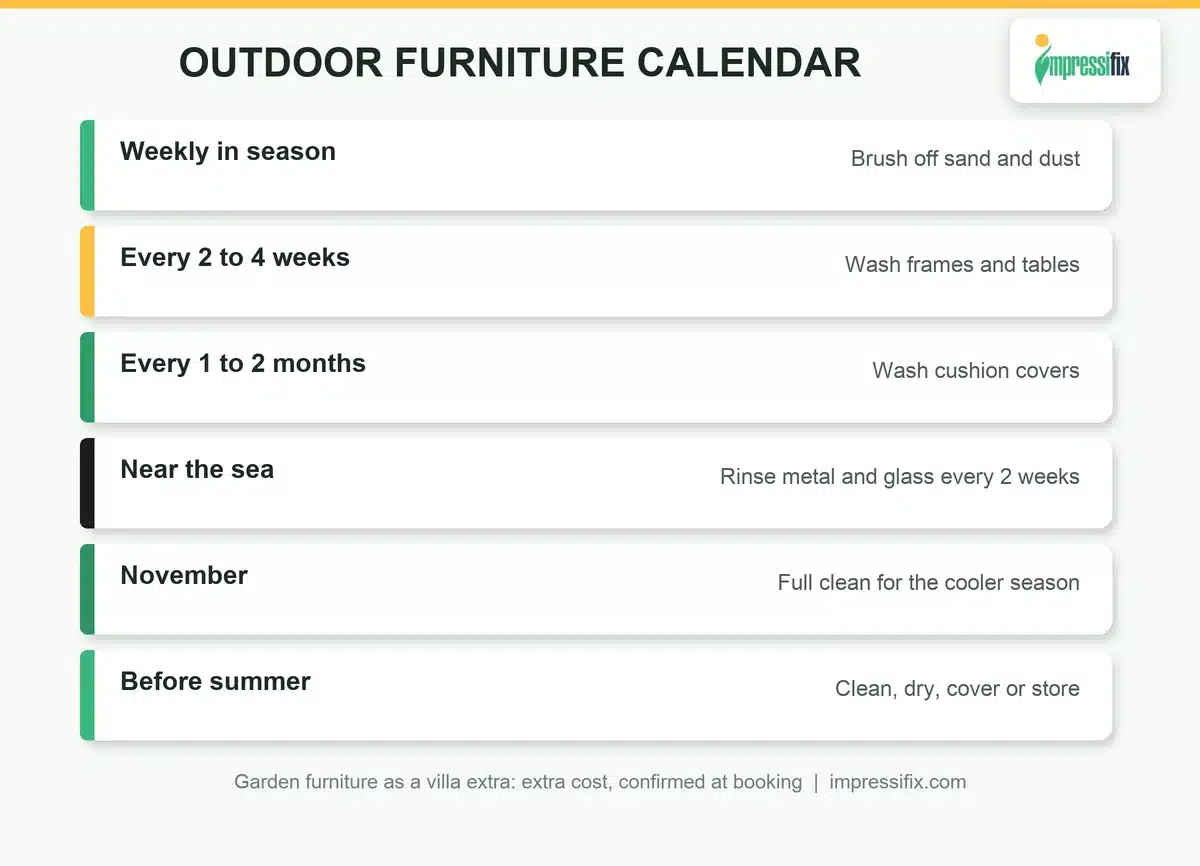
How often to clean outdoor furniture
| Job | How often |
|---|---|
| Brush or wipe off sand and dust | Weekly in the outdoor season, and after every dusty day |
| Wash frames and tables with mild soap | Every 2 to 4 weeks while in use |
| Wash cushion covers | Every 1 to 2 months, or after spills |
| Rinse metal and glass near the sea | Every couple of weeks |
| Oil or seal hardwood | Once or twice a year, if you want to keep the colour |
| Full clean | At the start of the cooler season (around November) and before summer storage |
Adding garden furniture to a villa clean
If you have a villa or a townhouse, you do not have to do all of this yourself. Terraces, roof areas and garden furniture can be added as villa extras to a regular cleaning visit or a deep clean, at an extra cost confirmed at booking. Tell us which pieces and materials you have, and we confirm what is possible for your set.
For planning, regular cleaning is AED 45 per hour, or AED 35 per hour for visits of 4 to 8 hours, and deep cleaning is AED 65 per hour, the same in every emirate. A regular villa visit typically takes 4 to 6 hours, so it costs about AED 140 to 210 at the AED 35 rate before any extras. Our guides to villa cleaning in Dubai and villa cleaning in Sharjah show what a whole villa visit covers, and after a garden gathering our guide to cleaning after a party helps with the indoor side.
Frequently asked questions
What is the best solution for cleaning outdoor furniture?
For most outdoor furniture, warm water with a few drops of mild dish soap is the best solution. Brush or vacuum off dry sand first, wash with a soft cloth or brush, rinse with a gentle spray and dry fully in the sun. Avoid bleach and abrasive pads on aluminium, glass and painted metal, and oil only hardwood.
What is a good homemade cleaner for outdoor furniture?
Mix 1 cup of white vinegar with 2 cups of water and a squirt of dish soap. It suits metal, plastic and resin wicker frames and lifts light mildew: scrub with a soft brush, then rinse with clean water. Test it on a hidden spot first, keep vinegar off natural stone, and never mix it with bleach.
What is the best way to clean outdoor wooden furniture?
Brush off dust and sand, wash along the grain with warm soapy water and a soft brush, rinse lightly and let the wood dry fully. Avoid harsh bleach and a pressure washer at close range. To keep the warm colour of teak or other hardwood, oil it once or twice a year after cleaning, following the maker’s instructions; otherwise let it weather to silver grey.
How do you get mold and mildew out of outdoor cushions?
Take the cushion outside and brush off loose mould first. Check the care label, then wash removable covers on a gentle cycle; for fixed covers, sponge the area with soapy water or a vinegar and water mix, rinse lightly and dry fully in the sun. Never mix bleach with vinegar or ammonia. If mould has spread into the foam, replace the insert.
Can I wash my outdoor cushions in the washing machine?
Only the removable covers, and only if the care label allows it. Zip the covers closed, wash them on a cool, gentle cycle with mild detergent and let them air dry rather than using a dryer. Never put the foam insert in the machine: sponge it, rinse lightly and stand it on its edge in the sun so it dries right through.
Book your villa clean or get a quote in 60 seconds
Tell us your home size, your area and which outdoor pieces you want included, and we will confirm the price before you book. Our team answers Monday to Saturday, 9:30am to 7pm, and quote requests can also go to fixit@impressiful.com.